
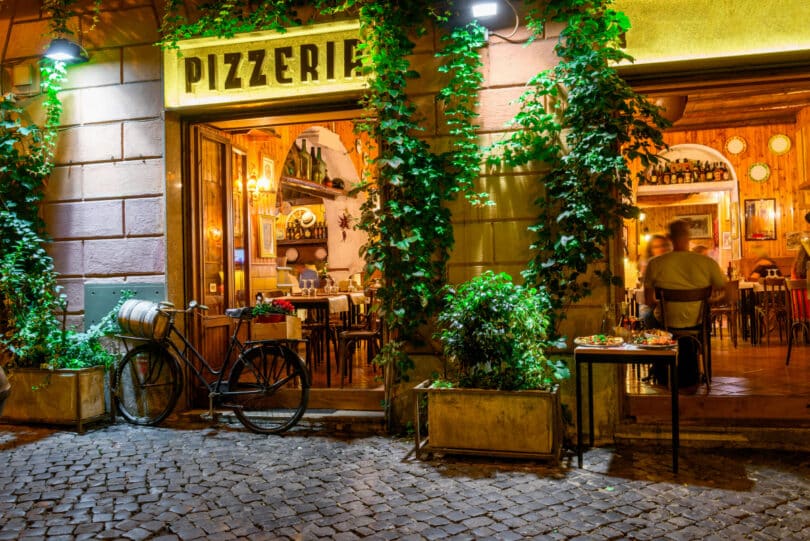
When you step onto the streets of Rome, especially after crossing the Tiber River (Fiume Tevere) into the famous narrow cobblestone (sanpietrini) streets of Rione XIII — the city’s official administrative district — the smells of roasted garlic, extra virgin olive oil, and freshly baked dough will make your head spin. Located within the UNESCO World Heritage Site — Historic Centre of Rome,Trastevere has been the beating heart of the city for centuries. It’s the hub for artisans, the working class, and Cucina Povera (traditional peasant cuisine) culture. But right in the middle of this enchanting Italian atmosphere — especially with the massive influx of tourists peaking for the 2026 Rome Jubilee (Giubileo) — a serious gastronomic minefield awaits unprepared visitors.
The line between tasting the best traditional pasta of your life and paying a fortune for a microwaved, mass-produced(industrial) lasagna is much thinner than you’d think. Do you really want to travel all the way to Italy just to pay top euro for a pizza with a rubbery crust or factory-made gelato? Of course not. But on the flip side, grabbing a seat at a touristy spot along the Tiber just for the view or convenience can genuinely save you time when you’re in a rush. The key is just knowing exactly what you’re paying for.
If your goal is to experience the true spirit of Roman cuisine (Cucina Romana), you need to be analytical about what you eat and which Trattoria or Osteria you sit down at. In this guide, we’ll skip the superficial and often sponsored online recommendations. Instead, you’ll discover field-tested strategies to avoid fake Italian food and order like a local gastronomy expert.
Is a Gastronomy Guide a Luxury or a Rational Way to Save Money?
Many tourists view local food tours simply as an extra, expensive dinner option that strains the budget. It’s entirely free and possible to find excellent, authentic restaurants on your own using digital maps or reliable guides like Gambero Rosso, Michelin Bib Gourmand, and Slow Food Italia.However, for travelers short on time, joining a quality food tour isn’t always an unnecessary expense. On the contrary, it can be a rational cultural and financial investment that teaches you how to manage your money for the rest of your trip. Learning the region’s culinary codes (like which ingredients are DOP certified or in season) from a local expert on your first day in Rome will largely prevent you from wasting money on low-quality food later on.

A well-run tour can be a smart shortcut–learn the rules early, avoid overpriced mistakes later. Photographer: Gianluigi Esposito
The **trastevere food tour authentic vs tourist trap** comparison you often see online while planning your vacation is actually the clearest indicator of this basic need. Visitors rightfully want to tell authentic Italian flavors apart from commercial traps. A professional guide doesn’t just offer you delicious dishes; they also give you hands-on lessons on how to read a menu, understand the rhythm of the locals, and find the truly hidden gems in the backstreets. To get this street-level education and sit directly at the best tables, you can look into proven options with transparent reviews, like “Rome: Twilight Trastevere Food Tour with Wine Tasting.”
To be honest, though, these tours run between 80 and 120 euros per person. If you don’t want to spend your budget on this kind of activity, you’re perfectly fine visiting the local Mercato di San Cosimato early in the morning, chatting directly with the vendors, and building your own authentic itinerary for free. Whether you do it with a professional or through your own analytical research, the value this newfound perspective adds will let you read the menu like a true Roman when you sit down at a traditional restaurant on your own later in your trip.
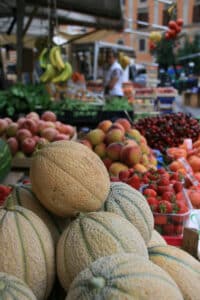
Skip the tour budget: start your morning at Mercato di San Cosimato and talk to the vendors. Photographer: Lizzie Kuang.
Red Flags on the Street: Strategies for Spotting Tourist Traps in Seconds
You can tell a genuine local Roman restaurant from a commercial spot that prioritizes high table turnover in seconds, before you even walk through the door. As you walk down busy Trastevere streets like Piazza Trilussa or Via della Lungaretta, use these practical tests to filter the venues:
- The Danger of Restaurant Barkers (Buttadentro / Acchiappaturisti): If someone is standing at a restaurant’s door holding a menu, making eye contact with passersby, and aggressively trying to usher you inside, it’s a major sign that the place lacks a local customer base (habitué). While you don’t have to run away immediately, it’s smart to lower your expectations for an authentic experience. These places pay high rent and rely on spontaneous foot traffic to survive. A high-quality, multi-generational local Italian business doesn’t need aggressive marketing to pull you in. The tables at authentic spots are already booked days — sometimes weeks — in advance by local regulars.
- Multilingual, Photo-Heavy, and -Menu Turistico- Formats: Given 2026 tourism dynamics, it’s perfectly normal for good restaurants to have English menus. But if the massive menu hanging by the door features large, glossy photos of the food, is translated into six different languages (like English, Spanish, German, and Chinese) like an encyclopedia, and offers cheap, fixed-price combos like a Tourist Menu (Pasta+Drink for 15 Euros), you’re looking at a business optimized for tourists. Traditional restaurant menus are quite simple. Because they change based on the day’s fresh market(mercato) ingredients and seasonality (stagionalità), they’re usually written in chalk on a blackboard and are mostly in Italian.
- The Dinner Hour (Cena) Illusion and the Aperitivo Reality:If you see a restaurant completely packed for dinner at 6:30 PM, you should know that almost everyone inside is an international tourist.For families with children or jet-lagged travelers exhausted after a long flight, eating this early is absolutely a valid choice, and these spots cater exactly to that practical need. However, a real Italian dinner service (Cena) rarely starts before 7::30 PM.The window between 6:00 PM and 7:30 PM isn’t for sitting down to a main course; it’s Aperitivo hour, when Italians enjoy light snacks paired with a glass of wine or an Aperol Spritz. Authentic Roman joints don’t hit their peak capacity, chaotic noise, and true energy until between 8:30 PM and 9:30 PM. The main goal of kitchens packed for early dinners is simply to turn tables as fast as possible.
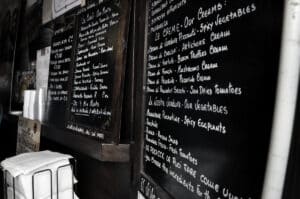
A short, seasonal chalkboard menu is often a stronger authenticity signal than a photo-heavy “tourist menu”. Photographer: Firat Cetin
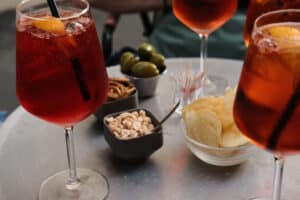
Follow the local rhythm: aperitivo first, then a later dinner–Rome doesn’t truly “start” at 6:30 PM. Photographer: Courtney Jill.
The Authenticity Test in Roman Cuisine: Details That 99% of People Miss
When you pick up a menu or check out a display window, you need to use the insider knowledge of ingredients that only local culinary pros know to gauge food quality. How can you tell if the food on your plate was prepared using methods passed down through generations, or if it was churned out through fast-food reflexes tailored to international tourist tastes?
The Gelato Test: Focus on the Pistachio Green
Everywhere you turn in Rome, you’ll see shops (Gelateria) claiming to sell handmade (Gelato Artigianale) ice cream. Unfortunately, Italy lacks a strict legal framework regulating the use of the word “Artigianale.” Those massive mounds of fruit-decorated gelato overflowing from metal tubs might look incredibly appealing for social media photos, but the reality is that much of that volume comes from pumped-in air, industrial powder mixes (basi pronte), and artificial thickeners.
The easiest and most foolproof way to spot a true artisan gelato maker is to check their pistachio ice cream (Pistacchio). If the pistachio in the display is a bright, fluorescent neon green, it most likely contains chemical colorants (or chlorophyll). Gelato made from real, natural pistachios — like Sicily’s famous Bronte pistachios (Pistacchio verde di Bronte DOP) — always has a pale, earthy, brownish-matte green color. By looking at this single color detail, you can eliminate nine out of ten places in Trastevere in seconds. Furthermore, traditional Italian gelato (where the mantecatura churning process is done correctly) isn’t inflated with air just for visual effect. To perfectly retain temperature and prevent oxidation and melting, it’s stored out of sight in deep, metal-lidded cylinders called Pozzetti. If you don’t see mountains of gelato in the window and only see metal lids instead, you’re probably at a proper, honest gelateria.
The Ultimate Dealbreaker of Italian Cuisine: No Cream in Carbonara
Among the holy quartet of Roman cuisine (Cacio e Pepe, Amatriciana, Gricia, Carbonara), the classic plate of Spaghetti or Rigatoni alla Carbonara is the most internationally abused. Highly touristy or commercially driven spots will add liquid cream (panna) to the sauce to cut costs, make the consistency foolproof even for inexperienced line cooks, and speed up service. They’ll also swap the traditional cured meat for ordinary smoked bacon or basic pancetta.
A true Roman Carbonara never contains cream. It uses only four main ingredients: Guanciale (pepper-cured pork jowl — critical for the quality of the fat that gives the dish its aroma), Pecorino Romano DOP (a sharp sheep’s milk cheese), fresh egg yolks, and freshly ground black pepper. That magnificent creamy texture (Carbocrema) isn’t achieved by pouring in liquid cream; it’s made by emulsifying the egg, cheese, and the meat’s own melted fat with starchy pasta water in a pan. This requires precise heat control and a skillful binding technique called Mantecatura. If the menu lists cream under the Carbonara ingredients, or if your plate arrives swimming in a thick, white liquid sauce, you should lower your expectations, knowing the restaurant is leaning on international shortcuts rather than traditional recipes.Sure, these dishes are still edible; but a kitchen that strays from tradition is nothing more than an ordinary business looking to save time or money rather than serve authentic food.
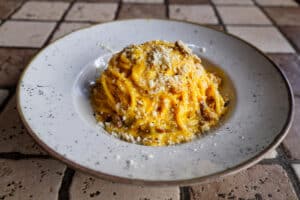
Real carbonara is emulsified eggs, pecorino, guanciale, and pepper–cream is the giveaway. Photographer: Fab4Photo
The Art of Ordering in Trastevere and Hidden Street Food Delights
Once you’ve found the right spot, you need to know the local rules to navigate the ordering process efficiently and protect your budget. Roman gastronomy isn’t just about long dinners with white tablecloths; street food (Cibo da Strada) is a crucial part of daily life, the social rhythm, and the region’s history.
One absolute must-try iconic snack is the Supplì — a deep-fried, breadcrumb-coated ball filled with tomato-meat sauce rice (ragù) and a center of hot, melted mozzarella. Locals call it Supplì al telefono because when you pull it in half, the cheese stretches out just like an old telephone cord. If you want to taste street food, centuries-old bakeries (Forno), and Rome’s deep-rooted history from a broader perspective, consider checking out and booking options like Rome – Campo de’ Fiori, Jewish Ghetto (Ghetto Ebraico), and Trastevere Food Tours..
We should also point out that you can easily plan these kinds of cultural routes on your own using guides from the Italian National Tourist Board — Rome.
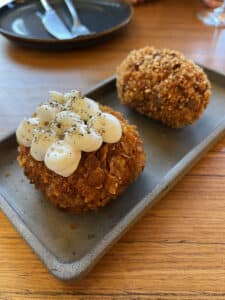
Supplì “al telefono” is the Roman street-food classic—crack it open for the signature mozzarella stretch. Photographer: Mstr90
Whether you’re on a guided tour or exploring solo, these neighborhoods offer the perfect chance to taste Carciofi alla Giudia (Jewish-style Roman artichokes) right at the source. It’s a whole artichoke deep-fried until its leaves are as crispy as potato chips.
But we want to add a quick, honest expert warning here: the real Romanesco artichoke is a spring vegetable (in season from February to May). If you see “fresh” Carciofi on a restaurant menu in August or October, there’s a 99% chance you’re eating a frozen product. Respectable, honest establishments flat-out refuse to serve this dish out of season and will take it off their menus.
The Most Common Mistakes When Ordering Food in Rome
When you sit down at a restaurant, it’s not just the quality of the food that matters; how you order directly impacts how the local owners treat you. Unknowingly breaking the strict rules of Italian food culture can change the dynamics of the service you receive and instantly brand you as an “outsider.” Here are the most critical culinary faux pas and billing details you need to avoid:
- Cappuccino Timing and Digestion Dynamics: In Italy, milky coffees (Cappuccino, Caffè Latte, Macchiato) are generally consumed only at breakfast and during the morning, usually paired with a sweet croissant (Cornetto). The main reason? Heavy milk messes with digestion later in the day. If you order a Cappuccino after 11:00 AM or right after a heavy plate of pasta, you’ll instantly be pegged as a typical tourist for violating the rules of milk digestion. Sure, they’ll serve you the coffee, but local norms dictate that you should always opt for a straight Espresso (or simply un caffè, as Italians say) or a Digestivo (Limoncello, Amaro, etc.) to aid digestion after a meal.
- The Seafood and Cheese Combo: If you have a seafood dish in front of you (like Spaghetti alle Vongole — spaghetti with clams), asking the waiter to grate Parmesan or Pecorino cheese over it is an unforgivable culinary sin. In Italian tradition, fish and cheese never meet on the same plate. This isn’t just food snobbery; it’s entirely about a chemical flavor clash. The sharp, salty, and animalistic aroma of the cheese completely overpowers and destroys the delicate, briny flavor of the seafood.
- The “Coperto” Detail on the Bill and the Legal Facts: When you ask for the check (Il conto, per favore), you might see a Coperto (table or cover charge) on your bill. Usually ranging from 2 to 4 euros per person, this fee is widely known as a legal and standard practice across the country, including in northern Italy. However, as of 2026, there’s a highly critical regional detail that many tourists visiting Rome don’t know: in the Lazio region, where Rome is located, a 2006 regional law (Legge Regionale 21/2006) actually made it illegal to charge a ‘Coperto’ just for sitting at a table. Instead, honest Roman restaurants will charge a Pane e Servizio fee to cover the bread and service they provide. But if your bill shows both the illegal Coperto and an additional 10% or 15% Servizio (service charge) at the same time, you can bet that establishment is using an aggressive, tourist-trap pricing policy. On the other hand, there’s no mandatory 20% American-style tip (mancia) in Italy. If you’re happy with the service, simply rounding up the bill is a perfectly polite and sufficient gesture.
By keeping your eyes peeled and focusing on the small details as you stroll through the streets of Trastevere, you can discover the city’s true culinary wealth without breaking the bank. When planning your trip, it’s always helpful to verify current events, food festivals, and regional announcements via the Official Tourism Portal of the Municipality of Rome. Approaching menus with a healthy dose of skepticism, carefully inspecting the color of pistachio gelato, and following the dining hours of the locals instead of falling for the barkers at the door will be your most reliable compass in this gastronomic maze. Despite the growing crowds and global inflation in 2026, authentic Italian cuisine remains a masterpiece of simplicity, fresh, geographically protected ingredients, and centuries-old patience.When you find this level of quality at an honest and reliable spot, you’ll get more than your money’s worth for every single euro you spend.
Thanks for reading!
Featured Image Credit: Catarina Belova
Leave a Comment