

1.050 Reviews
from €69.00 EUR
Duration: 3 Hours
Organized by: Maya Tours
Embark on an exceptional journey through the heart of Vatican City — the world’s smallest sovereign state and a UNESCO World Heritage Site — where you’ll discover the awe-inspiring Sistine Chapel, the sprawling Vatican Museums, and the majestic St. Peter’s Basilica. With our knowledgeable art-historian guide by your side, you gain insider insights and special access that turn a simple visit into an unforgettable adventure. We’ve designed this small-group tour so you can bypass the crowds, delve into centuries of art and history, and truly immerse yourself in the Vatican’s treasures rather than standing in endless lines.
Exclusive Skip-the-Line Access
One of the biggest perks of this tour is our exclusive skip-the-line entry to the Vatican’s top attractions. During peak season, queues to enter the Vatican Museums or St. Peter’s Basilica can stretch for hours — definately not how you want to spend your limited time in Rome.
Why waste half your day waiting under the Italian sun when you could be exploring Renaissance galleries and priceless artifacts inside? We arrange priority access so you walk straight in, saving you precious time and energy. In fact, savvy travelers and guidebooks often emphasize the importance of fast-track entry at these sites, and we’re gonna make sure you breeze right past the crowds.
Personalized Small-Group Experience
Unlike large tours where you might feel like just another face in the crowd, our small-group format offers a more personalized and engaging experience. We keep group sizes limited, allowing everyone to stay close to the guide, ask questions freely, and hear every fascinating story. Instead of being herded around with 30 or 40 strangers, imagine exploring the Vatican’s marvels with a friendly small circle of fellow travelers. It creates an intimate atmosphere — almost like having a knowledgeable friend show you around their favorite museum. Who wouldn’t prefer that over getting lost in a sea of tourists? Our approach ensures you can soak up the atmosphere and truly connect with the art and history around you.
Vatican Museums: A Treasure Trove of Art and History
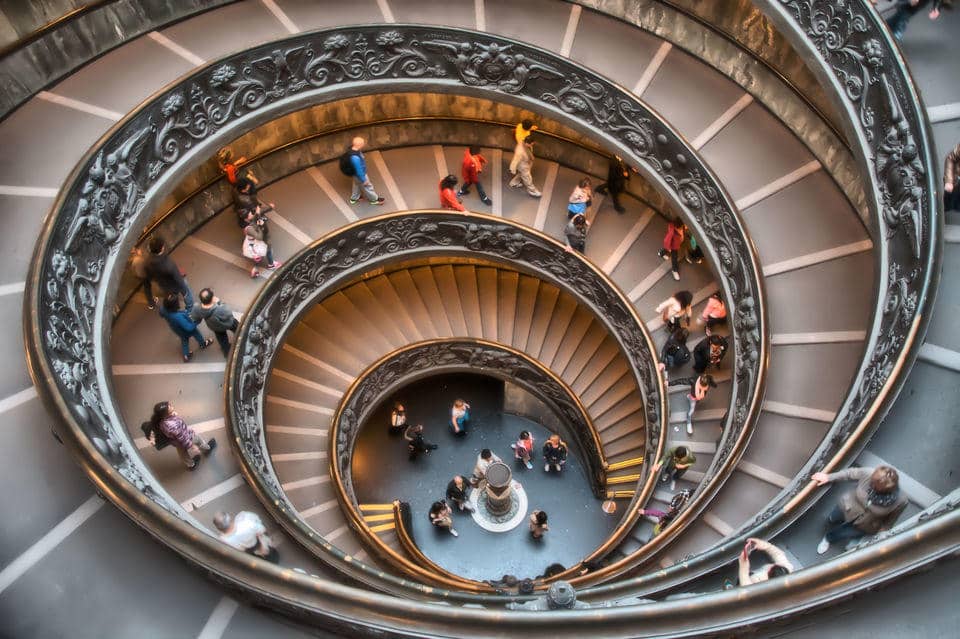
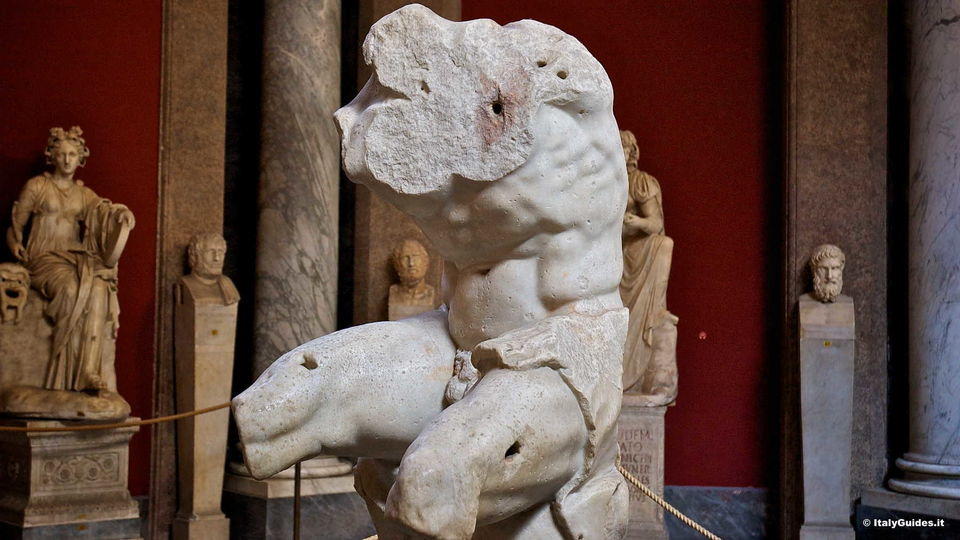
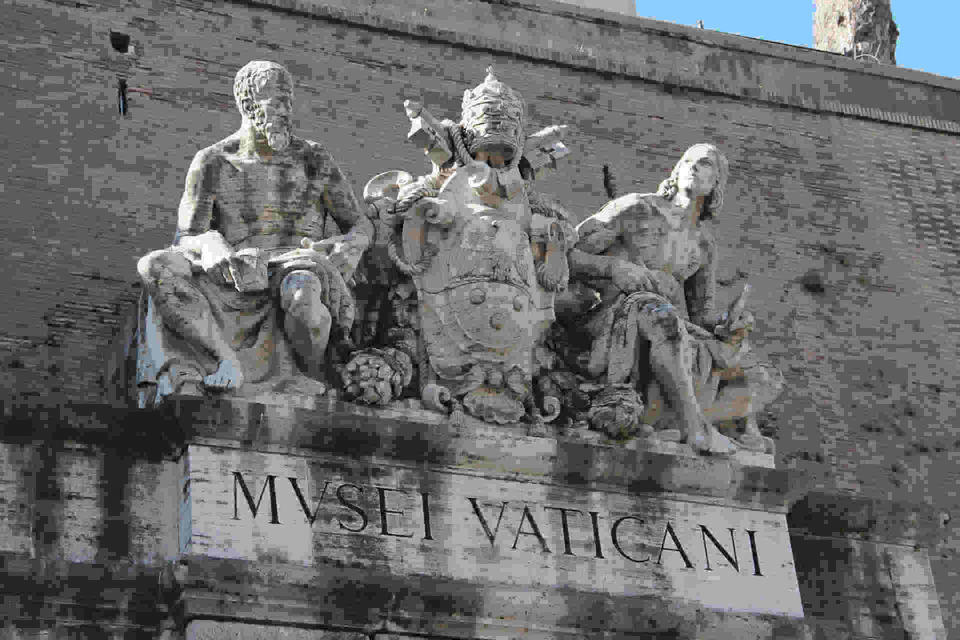
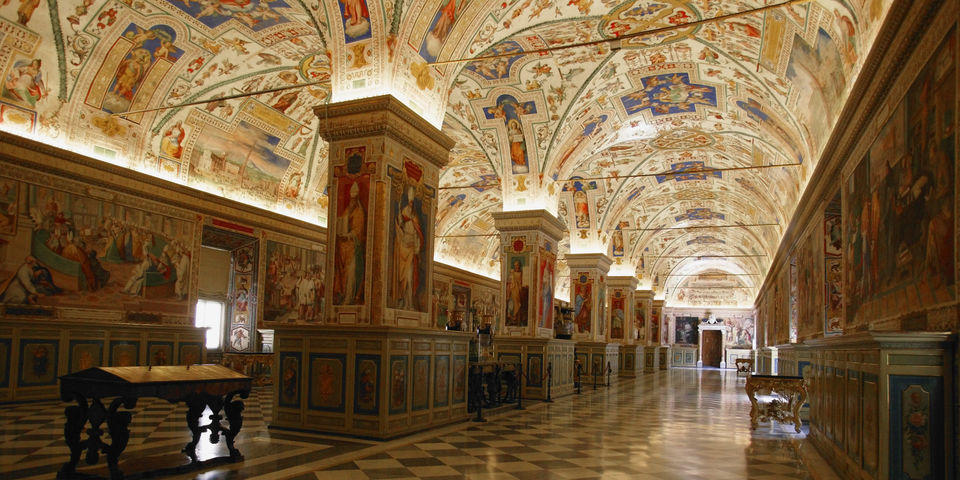
With skip-the-line tickets and an expert guide leading the way, we dive into the Vatican Museums, a vast collection of galleries that together form one of the world’s most important art museums. Home to around 20,000 works on display (from a collection of over 70,000!), the Vatican Museums are like stepping into a living encyclopedia of art history, filled with masterpieces from ancient sculptures to Renaissance paintings. As we wind through ornate halls and gallery after gallery of wonders, you’ll encounter countless highlights.
Our tour focuses on the most captivating and significant sections of the museum, including:
-
Pinacoteca (Art Gallery): Feast your eyes on a remarkable collection of paintings by legends such as Caravaggio, Raphael, and Leonardo da Vinci. This gallery boasts works like Caravaggio’s dramatic Deposition and Raphael’s stunning Transfiguration, offering a panorama of artistic genius under one roof.
-
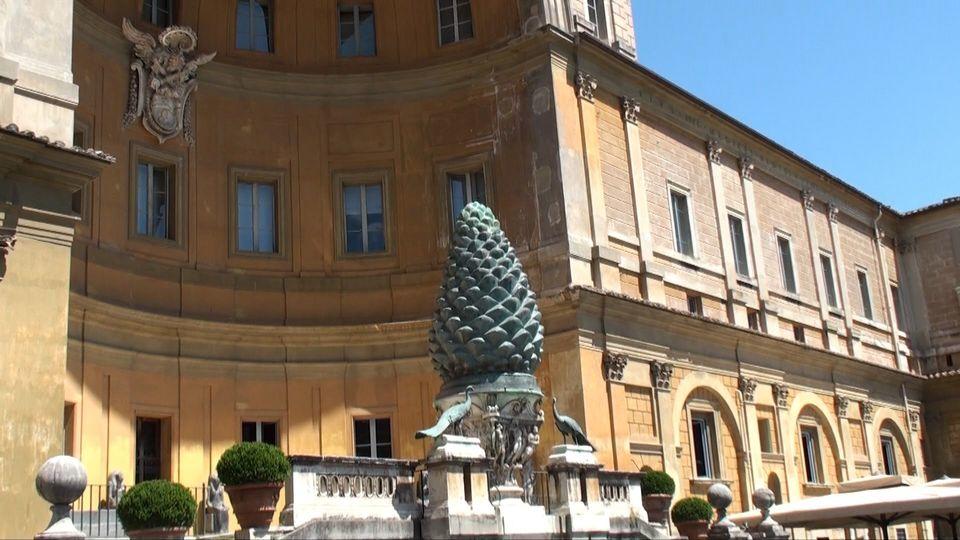
Octagonal Courtyard (Cortile Ottagono): Stroll through this open-air courtyard adorned with some of the Vatican’s most famous ancient statues. Here you’ll meet the gripping Laocoön and His Sons, an ancient sculpture so prized that Pope Julius II himself had it put on display right after its discovery in 1506. Nearby stands the elegant Apollo Belvedere, another classical statue that has inspired artists for centuries.
-
Gallery of Tapestries: Marvel at the intricate tapestries lining the walls of this dimly lit gallery. Based on drawings by Raphael’s pupils in the 16th century, these enormous woven artworks depict biblical scenes with such detail and color that they almost look like paintings. As you walk along, you might notice the eyes of certain figures seemingly following you — a clever artistic trick that never fails to impress visitors.
-
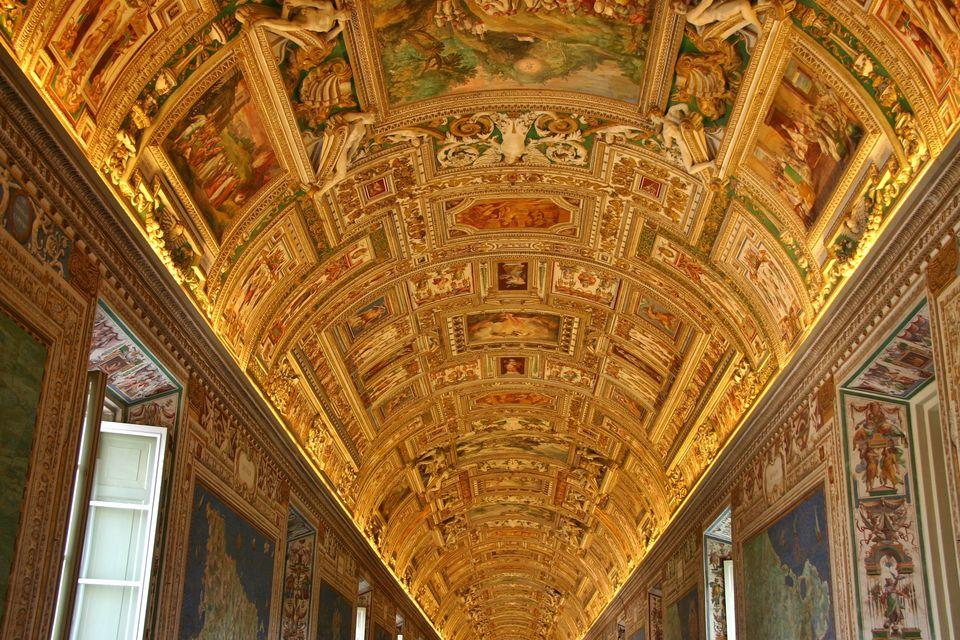
Gallery of Maps: Walk down a grand, barrel-vaulted corridor where the walls are covered with giant painted topographical maps of Italy. Created in the late 1500s, these maps are both beautiful and historically fascinating, showing how people in the Renaissance viewed the geography of the Italian peninsula. It’s like Google Maps of the 16th century, brilliantly illustrated in gold and blue. We’ll point out the map of the region of Rome and other notable sections as we journey through time.
-
Round Room (Sala Rotonda): Step into this magnificent circular hall inspired by the Pantheon, complete with a towering dome and ancient floor mosaics. In the center, a colossal bronze statue of Hercules dominates the room, while along the perimeter stand equally impressive statues of Roman gods and heroes. This is a spot where you can truly feel the grandeur of classical art surrounding you from all angles.
Sistine Chapel: Michelangelo’s Masterpiece
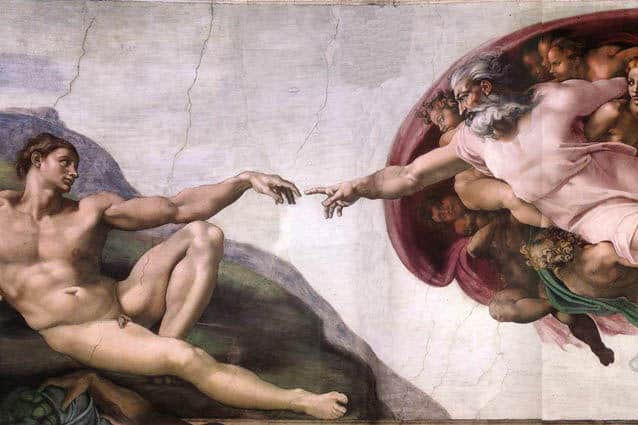
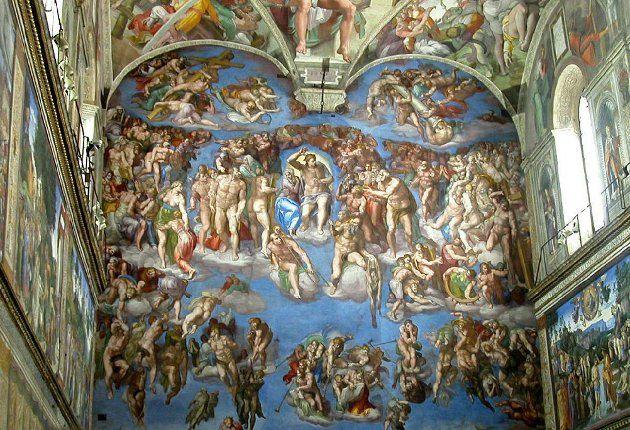
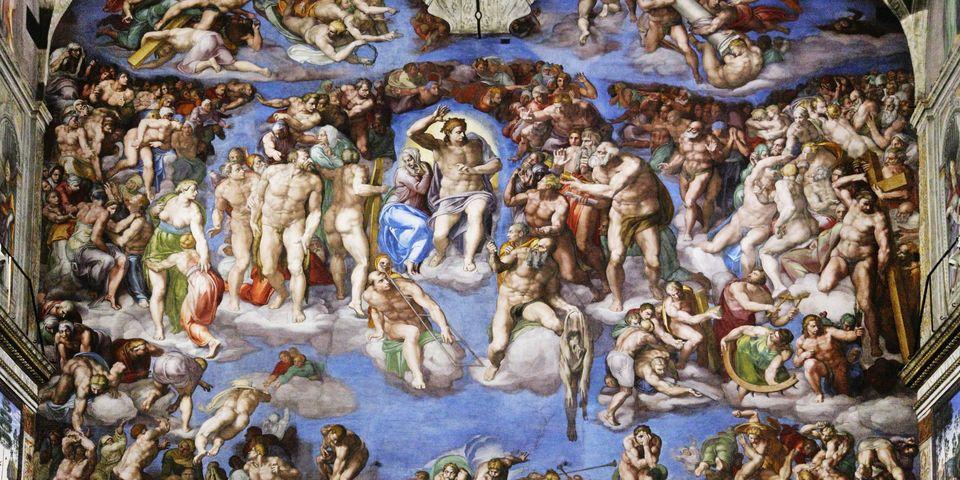
The pinnacle of our Vatican journey is undoubtedly the Sistine Chapel. We’ll step into this sacred chapel, the very place where new Popes are elected, and gaze up at Michelangelo’s breathtaking frescoes covering the walls and ceiling. As you quietly absorb the scene (silence is required in the chapel), you’ll see The Creation of Adam unfold across the ceiling — that iconic image of God and Adam nearly touching fingers — and The Last Judgment towering behind the altar in vivid blues and oranges. Our guide will have shared detailed background information beforehand, so by the time you stand beneath those frescoes, you’ll understand the stories, symbolism, and even some secrets behind them. The experience is often beyond words; many visitors find themselves awestruck, necks craned back, marveling at how a single artist could paint something so immense and beautiful over 500 years ago. Michelangelo painted the ceiling almost entirely on his own between 1508 and 1512, lying on scaffolding high above the floor — a truly astounding feat of endurance and skill. In the soft glow of the chapel, surrounded by masterpieces on every surface, you might feel as if time has stopped — a moment of pure wonder you’ll remember for the rest of your life.
St. Peter’s Basilica: Architectural and Artistic Splendor
After exiting the Sistine Chapel, we’ll take a special access route that leads directly into St. Peter’s Basilica, again skipping the long entry line outside. St. Peter’s Basilica isn’t just the largest church in the world — it’s an architectural marvel that took over a century to build and is rich with history. According to tradition, it stands on the very spot where St. Peter (one of Jesus’s apostles and the first Pope) was martyred and buried almost 2,000 years ago. By the early 4th century, Emperor Constantine had erected the first basilica here to honor St. Peter’s tomb. Fast forward to Christmas Day of the year 800: Charlemagne was crowned Holy Roman Emperor in that ancient basilica, highlighting the significance of this ground. Over time, as the original structure aged and the Renaissance dawned, the decision was made to construct a glorious new church worthy of being the heart of the Catholic world.
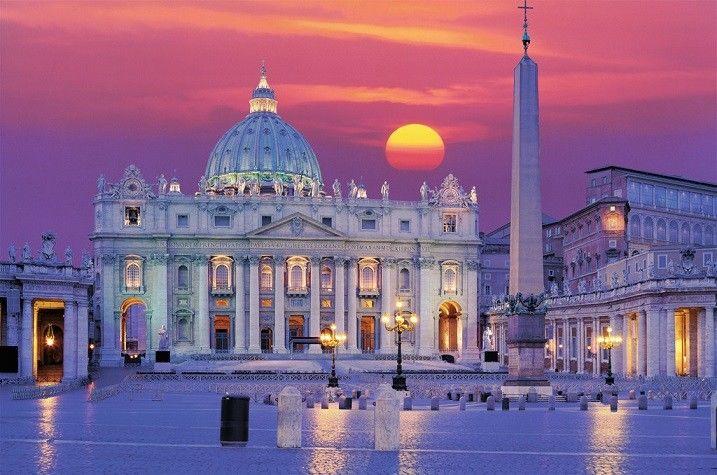
The rebuilding of St. Peter’s in the 1500s reads like a who’s who of Renaissance geniuses. Pope Julius II commissioned Donato Bramante to design the initial plan for a grand new basilica around 1506, and construction began under his guidance. After Bramante’s death in 1514, a succession of famed architects took up the project — including Raphael and Antonio da Sangallo — each contributing their own ideas. Finally, Michelangelo Buonarroti assumed chief responsibility in 1546. Michelangelo, by then in his 70s, radically simplified the floorplan to a compact Greek cross design and envisioned the massive dome that would crown the church. Though he only lived to see the drum (base) of the dome completed, his plans for the dome were so masterful that later architects followed them to finish the structure. In 1614, under Pope Paul V, architect Carlo Maderno extended Michelangelo’s Greek-cross design into a longer Latin cross by adding a grand nave, and he completed the majestic facade that now fronts the basilica. Some contemporary critics felt Maderno’s facade was a bit too broad for its height, but it certainly gives St. Peter’s an imposing presence. To create a fitting approach to the church, the great Baroque architect Gian Lorenzo Bernini designed the massive St. Peter’s Square in front of the basilica in the 17th century, embracing visitors with its sweeping colonnades.
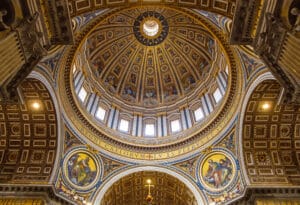
Even from afar, St. Peter’s Basilica is a sight to behold. Its crowning glory is Michelangelo’s colossal dome, visible from all across Rome’s skyline. The dome rests on a sturdy drum punctuated by windows and held up by colossal pillars, and it’s ringed by elegant double columns. If you’re feeling adventurous, you can even climb to the top — that’s 551 steps, or you can take an elevator part of the way — and be rewarded with a breathtaking 360-degree view of the city. The golden sphere at the very top of the dome’s lantern is surprisingly large up close (legend says it’s big enough to fit a few people inside). Before entering the basilica’s interior, we’ll also take a moment in the entry portico, designed by Maderno, which houses impressive statues of Constantine (the first Christian emperor) and Charlemagne (the first Holy Roman Emperor). Five enormous bronze doors lead into the church, each with its own significance. The central portal features the historic door crafted by the 15th-century artist Filarete, while the last door on the right is the Holy Door, ceremonially opened only during Jubilee years. On the far left, you’ll notice the Door of Death, a modern bronze door completed in 1964 by sculptor Giacomo Manzù, used for funeral processions.
St. Peter’s Basilica – Vatican and St. Peter’s Basilica Small Group Tour
Inside St. Peter’s Basilica: Highlights of the Interior
Stepping inside, you’ll be overwhelmed by the sheer size and splendor of St. Peter’s Basilica. The interior can hold tens of thousands of worshippers and is richly decorated with marble, gold, and mosaics. Here are some of the must-see masterpieces and sacred treasures you’ll encounter inside:
-
Michelangelo’s Pietà: Located just to the right as you enter, this marble sculpture of Mary holding the body of Christ is breathtaking in its emotional detail and serene beauty. Incredibly, Michelangelo carved this masterpiece in 1499 when he was only 24 years old. It’s the only work he ever signed (you can see his signature on Mary’s sash) and is now safely protected behind glass.
-
Bernini’s Baldachin: At the very center of the basilica, above the Papal Altar and St. Peter’s tomb, rises a monumental bronze canopy (called a baldachin) designed by Gian Lorenzo Bernini. Twisting, vine-covered columns support a soaring baroque canopy that stands nearly 30 meters (98 feet) tall — about as high as a 9-story building! Cast with bronze repurposed from the ancient Pantheon, this 17th-century masterpiece marks the sacred heart of the basilica where the Pope celebrates Mass.
-
Statue of St. Peter: Not far from the Baldachin, you’ll find an ancient bronze statue of a seated St. Peter, his right foot extended. This beloved statue’s foot has been worn smooth over centuries by millions of pilgrims’ kisses and touches. Tradition holds that touching St. Peter’s foot is a sign of respect and can grant blessings, so we’ll definitely pause so you can partake in this age-old ritual if you wish.
-
Altar of the Chair (Cathedra Petri): In the apse at the far end of the basilica, Bernini’s grand vision continues with the Altar of the Chair. He created a magnificent gilded bronze throne encasing a wooden chair that legend says belonged to St. Peter himself. The throne is held aloft by statues of four Church fathers and is lit from behind by a glowing stained-glass window of the Holy Spirit in the form of a dove. This dramatic centerpiece symbolizes the continuity of the Papacy from St. Peter to today.
-
Monumental Papal Tombs: Throughout St. Peter’s you’ll see ornate tombs and monuments dedicated to past Popes. Two of the most impressive are set near the Altar of the Chair: the tomb of Pope Paul III, sculpted by Guglielmo della Porta in 1575, and the tomb of Pope Urban VIII, crafted by Bernini in 1647 with a striking bronze skeleton lifting a marble drape. These grand sepulchers, adorned with lifelike statues, remind us that we are in the burial place of pontiffs and saints.
-
Saint Longinus: Among the four huge statues at the base of the dome’s piers, the figure of St. Longinus (carved by Bernini) stands out. Longinus was the Roman centurion who, according to tradition, pierced Christ’s side with a spear and later converted. Bernini’s dynamic sculpture captures him in a moment of religious ecstasy, holding the spear (a relic of which is supposedly kept within the statue’s pedestal). It’s a powerful example of Baroque art conveying spiritual awakening.
-
Vatican Treasury Museum: Off to one side of the basilica is the Treasury Museum, a trove of precious religious artifacts. Here you can see intricately crafted chalices, reliquaries, papal vestments, and historic artworks. Notable pieces include a beautifully gilded ciborium (altar vessel) attributed to Donatello, and the beautifully detailed tomb of Pope Sixtus IV created by Renaissance artist Antonio del Pollaiolo.
-
Vatican Grottoes: Lastly, we’ll descend to the underground crypt known as the Vatican Grottoes. In these hushed tunnels beneath the basilica, generations of Popes are laid to rest. You’ll walk past the tombs of dozens of pontiffs (including recent ones like Pope John Paul II) and see remnants of the foundations and columns from Constantine’s 4th-century basilica. This solemn space provides a moment of reflection and a tangible link to the ancient history beneath St. Peter’s.
St. Peter’s Square (Piazza San Pietro): An Iconic Gathering Place
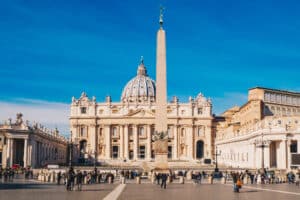
Exiting the basilica, you’ll find yourself standing in the magnificent expanse of St. Peter’s Square — a place that is as artistically impressive as it is spiritually significant. Designed by Bernini in the late 17th century, the square is an enormous ellipse, about 240 meters across, framed by two sweeping semicircles of colonnades. In total, 284 Doric columns of travertine marble form four rows that curve around the square like open arms, symbolically embracing the faithful. Atop the colonnades stand 140 statues of saints and martyrs watching over the plaza. In the center, two matching fountains (one by Carlo Maderno and one by Bernini) provide a pleasant symmetry with their cascading water, and a 25-meter tall Egyptian obelisk rises between them. Brought to Rome in ancient times and erected here in 1586, this obelisk is a witness to history — it even contains a relic of the True Cross at its summit according to legend.
There are a couple of fascinating details to notice in the square. If you stand on a round stone disc near the obelisk (there’s one on each side, aligned with the fountains), the colonnades magically appear to line up. From that spot, all four rows of columns perfectly align behind one another, an optical illusion showing Bernini’s architectural genius. Also, take a moment to look toward the right side of the basilica: you’ll see the façade of the Apostolic Palace, which is the Pope’s residence, and nearby the small brick Sistine Chapel. On top of the Sistine Chapel’s roof, you might spot a little chimney. That very chimney releases white smoke to announce Habemus Papam — “We have a Pope” — when a new pontiff is elected during the conclave. Standing in this vast piazza, you can’t help but feel the weight of history and faith surrounding you. This is where huge crowds gather for papal audiences and Easter Mass, yet also where, on a quiet afternoon, you can ponder the incredible legacy of art, faith, and history that converges here.
St. Peter’s Basilica Small Group Tour
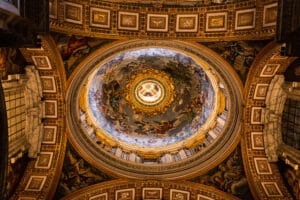
St. Peter’s Basilica Small Group Tour
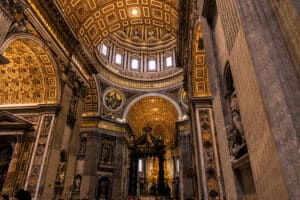
St. Peter’s Basilica Small Group Tour
Prepare for Your Unforgettable Experience
To make the most of your visit, here are some practical tips and things to keep in mind:
-
Wear comfortable attire: You’ll be doing a lot of walking and standing, so opt for comfortable shoes and light clothing suitable for the weather. The Vatican Museums alone have miles of galleries, so your feet will thank you!
-
Dress modestly: When visiting sacred spaces like the Sistine Chapel and St. Peter’s Basilica, its advisable to have your knees and shoulders covered. Visitors who don’t meet the modesty dress code (for example, wearing short shorts, mini-skirts, or sleeveless tops) may be denied entry. It’s best to bring a light shawl or scarf to cover up just in case.
-
Bring ID (and student card if applicable): For entry into the Vatican and for verification of any reduced tickets, be sure to have a valid passport or ID with you. Students should carry their student ID to enjoy any eligible discounts on admission.
-
Arrive on time: The tour starts promptly. Unfortunately, late arrivals can’t be caught up with the group once we’ve entered, and last-minute rescheduling or refunds aren’t possible. Plan to arrive a few minutes early at the meeting point so you don’t miss out.
-
Pack light: For security reasons, large bags, backpacks, or tripods are not allowed inside Vatican sites. There is a security check (similar to an airport) at the entrances. We recommend carrying only essentials (wallet, phone, camera, water bottle) to speed up the screening process.
-
Photography rules: You’re welcome to take photos in most areas of the Vatican Museums and inside St. Peter’s Basilica (without flash). However, photography and video are strictly not allowed in the Sistine Chapel, to preserve the artwork and respect its sanctity. Be prepared to put your camera away and simply enjoy the moment with your own eyes when we reach the chapel.
Ready to experience all of this history and beauty for yourself? Book your Vatican and St. Peter’s Basilica Small Group Tour today, and let us guide you through the wonders of the Vatican step by step. We’ll handle the details — all you gotta do is show up and enjoy an unforgettable journey into the heart of art, history and faith.
- Skip the lengthy lines to the monuments of the Vatican City,
- Take a guided trip of the Vatican Museums, Sistine Chapel and St. Peter’s Basilica,
- See works of art by Michelangelo and many other artists.
- Skip-the-line admission,
- Headsets,
- Expert art historian live guide (English, German),
- Small group strolling trip.
- Hotel pick-up and drop off.
Free cancellation up to 1 day before tour starts.
from €87.00 EUR
Duration: 3 Hours
Organized by: What a Life Tours
3. 135 Reviews
from €139.00 EUR
Validity: 3 Days
Organized by: Ticketstation
1.444 Reviews
from €39.00 EUR
Seller: Tours & Tickets GmbH
32.598 Reviews
from €61.00 EUR
Duration: 3 Hours
Organized by: Enjoy Rome
73.203 Reviews
from €32.00 EUR
Validity: 1 day
Seller: Getyourguide GmbH
143.079 Reviews
from €32.00 EUR
Validity: 1 Day
Organized by: Getyourguide
142.148 Reviews
from €385.00 EUR
Duration: 2.5 Hours
Organized by: Roma Experience Tours
1 Review
from €137.00 EUR
Duration: 3-3.5 Hours
Organized by: Italia Tours
1.956 Reviews
from €325.00 EUR
Duration: 3 Hours
Organized by: Private Tours of Rome
104 Reviews
from €50.00 EUR
Seller: Tiqets
1.049 Reviews