
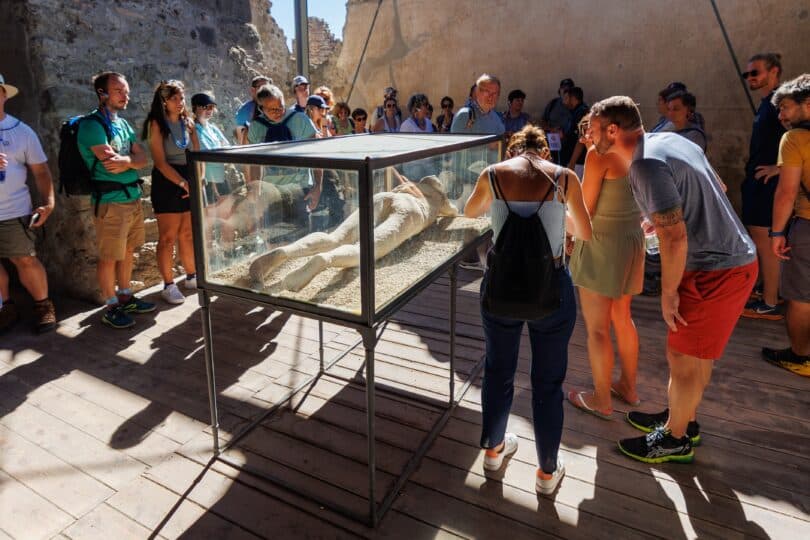
During your Italian vacation, leaving the historic streets of Rome behind and heading south to the Campania region to explore the ancient city of Pompeii at the foot of Mount Vesuvius is a pretty tempting idea. Recognized globally as a UNESCO World Heritage site, this remarkably preserved archaeological marvel offers an unparalleled glimpse into daily Roman life, abruptly frozen in time by the catastrophic eruption of AD 79.
When looking at a map while planning your trip, you might think this 240-kilometer distance can be easily covered by train. In fact, in the travel forum debates you often come across — Rome to Pompeii Day Trip fast train vs bus tour — people frequently claim that hopping on an early morning train and doing this route on your own is the most liberating and budget-friendly option. To be completely transparent, if you are a seasoned backpacker traveling on a strict budget utilizing low-cost coaches like Flixbus, or a dedicated archaeology enthusiast who wants to spend an uninterrupted eight hours meticulously reading every plaque at your own pace, the DIY route is genuinely your best choice. But overlooking the logistical realities of Southern Italy for the average vacationer can inadvertently set you up for a highly demanding day. When you combine the region’s complex transit networks, highly congested train stations, and the sheer 44-hectare scale of the ancient city, organizing an independent trip often turns into a much more grueling physical endurance test than you’d initially expect. To ensure this logistical burden — sometimes taken on just to save a few euros — doesn’t pave the way for an exhausting day of your vacation, you need a transparent and objective look at the realities on the ground.
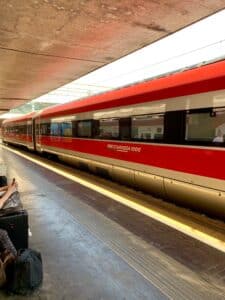
While Frecciarossa trains offer a comfortable start as the fastest way to travel from Rome to Naples, the real challenge begins during the transfer process at the Naples station. Photographer: Jan Hospodka via Shutterstock
From Rome Termini to Naples Centrale
The Comfort and Dynamic Costs of High-Speed Trains: The most logical and modern way to head south independently is to take either Trenitalia’s flagship Frecciarossa 1000 or NTV’s Italo EVO high-speed trains departing from the bustling Rome Termini station. Reaching operating speeds of 300 kilometers per hour, these high-tech marvels will get you to the Naples Centrale station in just 1 hour and 15 minutes. Thanks to ample legroom, uninterrupted Wi-Fi, and heavily air-conditioned train cars, this first leg of the journey is incredibly comfortable and efficient.
However, behind this comfortable start lies a dynamic ticket pricing policy very similar to what commercial airlines use. If you meticulously plan your trip months in advance using the official apps to secure promotional “Super Economy” fares, your journey can be quite economical. But if you haven’t locked in these early-bird rates, round-trip high-speed train tickets for spontaneous or mid-season travel can easily hit the 80 to 100 euro mark per person based on current 2026 rates. (As a note of expertise: Trenitalia does operate a direct Frecciarossa service—the FR 9693—from Rome straight to Pompeii on Sunday mornings. If your itinerary aligns perfectly with a Sunday trip, this is a fantastic, transfer-free DIY option.) But for the other six days of the week, once you’ve paid for your standard fast-track tickets and arrived in Naples, you still aren’t at Pompeii; the real logistical headache and physical exertion kick off right in the busy corridors of this massive railway hub.
Chaos Beneath the Naples Station: The Circumvesuviana Train and Commuter Realities
Once you step out of the sterile, isolated bubble of the high-speed train and blend into the crowds at the Naples Centrale station, you’re instantly hit with that vibrant but chaotic rhythm unique to Southern Italy. To catch the local commuter line to the ancient city’s gates, you have to follow the signs downstairs to the underground Piazza Garibaldi stop on the station’s lower level and transfer to a regional train network managed by EAV, famously known as the Circumvesuviana.
Connecting Naples to the scenic Sorrento Peninsula, the Circumvesuviana line is one of Europe’s busiest local transit arteries, simultaneously packing in tens of thousands of daily commuters alongside hordes of international tourists lugging massive backpacks. A one-way ticket is incredibly cheap (just a few euros), but you’ll often pay for those financial savings with your physical comfort. Finding a seat during this 40-minute ride in older, heavily utilized train cars that mostly lack robust air conditioning is practically impossible during peak summer months. Furthermore, much like any highly congested tourist transit corridor across major European cities like Paris or Barcelona, this specific line requires heightened situational awareness, as opportunistic petty theft can occasionally occur in the crowded carriages. Standing in the sweltering summer heat while keeping a tight, anxious grip on your valuables drains your energy before you even begin your long trek through Pompeii’s massive archaeological grid.
While the regional transit authority does offer a climate-controlled alternative with guaranteed seating and fewer stops — called the Campania Express — to ease this intense commute for tourists, its schedule is extremely limited. To catch this upgraded train, which only departs a handful of times a day, you have to time your arrival from Rome down to the exact minute. Missing this specific connection due to a minor high-speed train delay will force you back onto the standard commuter lines anyway, completely derailing your carefully planned daily itinerary.

Circumvesuviana Railway Line in the Suburbs of Naples, Italy. Photographer: lirik39 via Shutterstock
A 44-Hectare Shadeless Maze
The Struggle to Navigate Pompeii: When you hop off the Circumvesuviana train at the Pompei Scavi – Villa dei Misteri stop and pass through the Porta Marina ticket booths, you aren’t stepping into a small, enclosed museum exhibition area; you’re entering a colossal ancient metropolis spanning a full excavated 44 hectares (over 100 acres). Pompeii showcases the flawless urban planning of the Roman Empire, divided into distinct districts (Regiones). But today, modern directional signs on these ancient basalt streets are intentionally kept scarce to preserve the site’s historical authenticity, and natural shaded resting spots are practically nonexistent.
So, what happens when you try to navigate this massive complex on your own, armed only with the confusing paper map handed out at the entrance or without downloading the official MyPompeii app? You’ll likely find yourself walking in circles down the grand Via dell’Abbondanza, desperately trying to locate the structures reflecting ancient commercial life like the Macellum (ancient market), the narrow corridors of the famous Lupanar brothel, the civic heart at the Forum, or the magnificently frescoed rooms of the House of the Vettii. By 1:00 PM, with the scorching Mediterranean sun directly overhead, the effort of wayfinding quickly surrenders to sheer physical exhaustion. Without a strategic route or the contextual storytelling of a knowledgeable guide, most independent tourists spend less time absorbing the profound historical details provided by Pliny the Younger’s accounts and more time battling the intense heat while frantically hunting for specific landmarks or the nearest exit. Ultimately, this lack of clear geographical and historical guidance ends up wasting your limited vacation time.

The lack of directional signs across the massive 44-hectare ancient city of Pompeii forces visitors to exert extra effort on scorching summer days. Photographer: ennar0 via Shutterstock
2026 Pompeii Entry Rules and Ticket Quotas
To curb the structural damage caused by overtourism and align with the Italian Ministry of Culture’s strict preservation mandates, the Pompeii Archaeological Park management, under current director Gabriel Zuchtriegel, rolled out rigid entry restrictions starting in 2026. (Pompeii Archaeological Park Official Site: http://pompeiisites.org/en/ ) Setting off from Rome and just relying on purchasing a ticket at the physical booth at the gate is one of the biggest logistical mistakes you can make under today’s operational conditions. Independent travelers must secure their spots on the official TicketOne portal well in advance:
- Daily 20,000 Visitor Limit: Entry to the site is now strictly capped at 20,000 people per day. During the high season (spring and summer), this capacity quota is usually maxed out by mid-morning, leaving spontaneous arrivals stranded.
- Name-Specific (Nominative) Ticket Policy: To prevent illegal ticket scalping and manage crowd flows efficiently, all tickets sold must feature the visitor’s full legal name. At the security checkpoints at the gates, the name on your digital or physical ticket must exactly match the name on your government-issued passport or official ID. Reputable tour companies handle this tedious bureaucratic compliance process in advance on behalf of their guests, saving you from potential denial of entry or wasting time at the entrance.
- Current Pricing: As of 2026, the standard Pompeii Express entrance ticket is priced at 20 euros, while the comprehensive Pompeii Plus ticket — which covers access to the stunning suburban villas like the Villa of the Mysteries — is set at 25 euros.
- Strict Baggage Restrictions: Bringing backpacks, tripods, or suitcases larger than 30x30x15 cm into the site is strictly prohibited to protect the delicate stonework. You will be required to use the onsite cloakroom facilities.
Why Do Fully Comprehensive Private Tours Reduce Your Stress to Zero? To be completely honest, booking a guided tour means sacrificing a degree of ultimate freedom; you adhere to a group schedule and typically spend around two and a half hours inside the archaeological park. However, when you objectively stack up all these transit hurdles, situational awareness requirements, and strict 2026 ticket quotas, the reality of the independent “budget” illusion quickly becomes clear for the average vacationer. For a standard independent trip, the combined cost of the dynamically priced high-speed train, the commuter transfer, the nominative entrance ticket, and renting an official audio guide easily hits the 120-140 euro mark per person. In contrast, a fully comprehensive tour departing from Rome — managed from start to finish by hospitality professionals — typically runs between 140 and 160 euros.
This incredibly small price difference instantly buys you logistical immunity and peace of mind, while saving you hours of rigorous planning. Tours that either depart directly from Rome in a luxurious, air-conditioned bus or take the high-speed train to Naples before shuttling you straight to Pompeii’s gates in private vehicles completely insulate you from the Circumvesuviana nightmare. You bypass the 2026 nominative ticket gate anxiety entirely, walking right in using the fast-track, pre-reserved group privileges organized securely on your behalf. Ultimately, this lets you maximize the most valuable, non-renewable asset of your Roman vacation: your time.
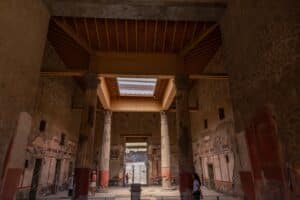
Expert archaeologist guides keep you from getting lost in the labyrinthine streets, leading you straight to the best-preserved masterpieces like the House of the Vettii. Photographer: rui vale sousa via Shutterstock
The Secret On-the-Ground Strategies of Archaeologist Guides
When you book a professional tour, the true return on your investment reveals itself out in the field through the strategic moves of an expert, licensed archaeologist guide. Experienced guides actively avoid the massive tourist crowds bottlenecking at the primary Porta Marina entrance, frequently leading their group through the much quieter Piazza Anfiteatro gate instead. This clever maneuver lets you explore the colossal Roman amphitheater and its surrounding ancient gymnasiums (palaestra) before they get swamped with midday crowds.
Plus, your local guide knows by heart exactly which of the 2,000-year-old ancient street fountains (nasoni) still pump ice-cold, drinkable mountain water. When your energy starts to flag under the blistering sun, they’ll intelligently navigate you through shaded, narrow backstreets most tourists completely miss, bringing you right to a beautifully carved lion-headed fountain. Without you even having to ask, they’ll provide the deep historical context behind the haunting ash-encased plaster casts (calchi) of Mount Vesuvius’ victims, decode the vibrant menus painted on the walls of ancient fast-food joints (thermopolia), and reveal intricate floor mosaics in newly excavated sectors like Region IX — effectively transforming what looks like an overwhelming collection of silent ruins into a living, breathing ancient community right before your eyes.
The Hidden Physical Exhaustion of the Return Trip
The least anticipated but perhaps most demanding part of any Pompeii day trip is the journey back to Rome. After logging upwards of 15,000 steps over millennia-old, uneven basalt paving stones (viae) and absorbing a dense bombardment of historical facts, profound physical exhaustion completely takes over your body. For independent travelers, this deep muscular fatigue morphs into a daunting final hurdle when you realize you have to board that busy Circumvesuviana train once again and stand shoulder-to-shoulder with the returning commuter crowd. Battling the masses at the Naples station to wait for your high-speed return train generates a level of travel friction that can easily overshadow some of the beautiful, educational memories made earlier in the day.

Professional tours provide radio headsets, allowing you to listen to the fascinating details of ancient Roman history without interruption, even if you wander a bit from the guide. Photographer: Dainis Zvingulis via Shutterstock
On the other hand, as a guest on a fully comprehensive tour, you walk directly out of the ancient city’s exit gates and right onto your waiting private, air-conditioned bus or pre-arranged station shuttle. Reclining in a comfortable seat in a cool, quiet environment and enjoying a deep, uninterrupted sleep all the way back to Rome is arguably the greatest, yet most understated, luxury these organized tours provide. While independent DIY travel remains a fantastic option for those who thrive on logistical freedom, instead of spending your precious vacation days trying to troubleshoot regional transit glitches, passing the organizational burden over to hospitality professionals so you can get completely swept away by the magic of history and archaeology is a highly strategic way to perfect your Rome trip. Wandering Pompeii’s mysterious streets without the anxiety of getting lost or missing a connection — focusing entirely on the profound emotions that ancient history evokes — is, in our professional opinion, the ultimate way to maximize your Italian vacation investment.
Pompeii Official Site: http://pompeiisites.org/en/
Featured Image Credit: Tourists visit the petrified human body in the Villa of the Mysteries at the archaeological park of Pompeii in southern Italy. Photographer: Hyserb.
Leave a Comment