

Located centrally in Piazza Barberini, Triton Fountain (in Italian Fontana del Tritone) immediately captures the attention of passersby with its striking depiction of Triton, the mythological Greek god of the sea. Crafted meticulously in 1642 by the renowned sculptor Gian Lorenzo Bernini, the fountain features a compelling scene: Triton kneeling atop an enormous seashell, held aloft by four gracefully intertwined dolphins.
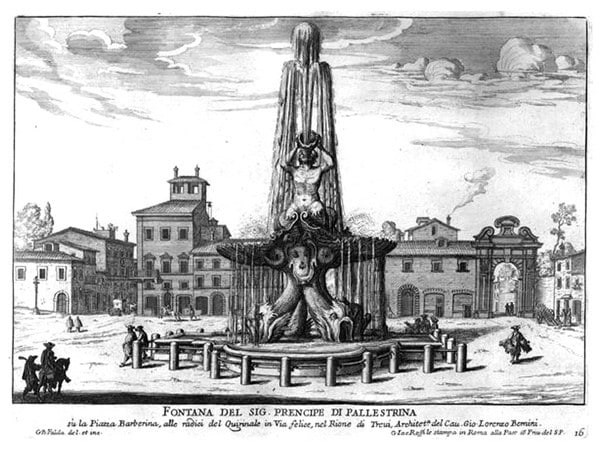
The Fountain of Triton in an engraving by G.B. Falda, second half of the seventeenth century
Commissioned by Pope Urban VIII Barberini, the artwork served as more than just decoration—it symbolized the grandeur and prestige of the Barberini family, prominently displayed by the incorporation of their heraldic bees within the design. But what exactly makes this fountain such a standout example of Baroque artistry?

Fountain of the Tritons, beautiful baroque fountain completed in 1715, in the center of Forum Boarium square, in Rome (with clouds)
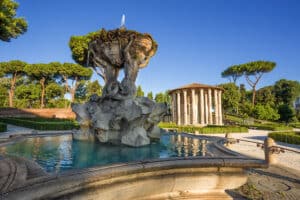
Fountain of Tritons and temple of Hercules in Rome © Phant
Bernini brilliantly merges sculpture and architecture in Triton Fountain, reflecting the Baroque era’s fascination with dynamic movement and dramatic expressions. Triton’s muscular torso, arched backward energetically, portrays him blowing forcefully into a large twisted conch shell, from which streams of water cascade. The fountain’s architecture blends seamlessly with this powerful sculpture, exemplifying Bernini’s genius for creating harmonious forms that captivate viewers from every angle.
In addition to this masterpiece, Bernini also crafted the Fountain of the Bees, initially intended as a convenient drinking spot for travelers at the corner of Via Sistina. Today, this smaller yet charming fountain marks the entrance to Via Veneto, still delighting tourists and locals alike.
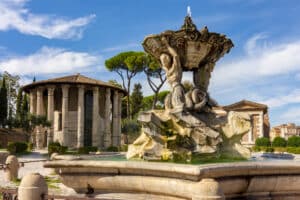
Fountain of Tritons and Temple of Hercules Victor in Rome, Italy © Mistervlad
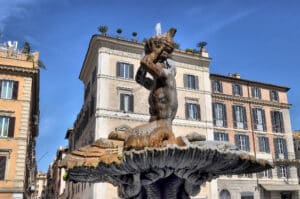
Triton Fountain © Silviacrisman
Throughout its existence, Triton Fountain has experienced multiple meticulous restorations to preserve its intricate details and structural integrity. Significant restoration projects occurred in 1987-1988, followed by further careful maintenance in the early 1990s and again in 1998. Most recently, the fountain underwent comprehensive restoration in 2013, ensuring its continued prominence as a cherished landmark in Rome.
Visitors wandering Piazza Barberini inevitably pause here, drawn by the fountain’s harmonious blend of myth, artistic brilliance, and historic prestige. Isn’t it intriguing to imagine Bernini himself envisioning how his work would mesmerize countless generations to come? Such thought transforms Triton Fountain from mere sculpture to an enduring testament of Rome’s rich cultural legacy.
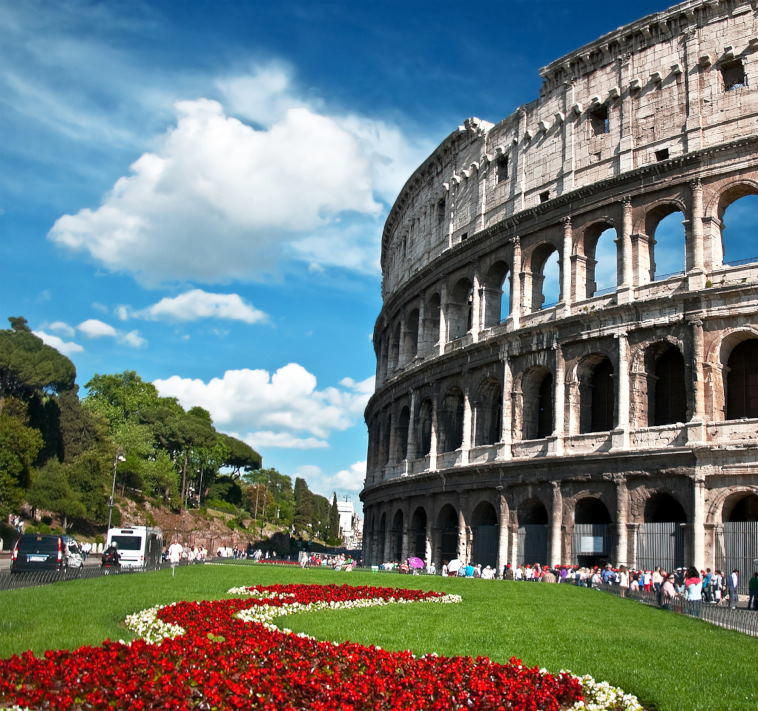
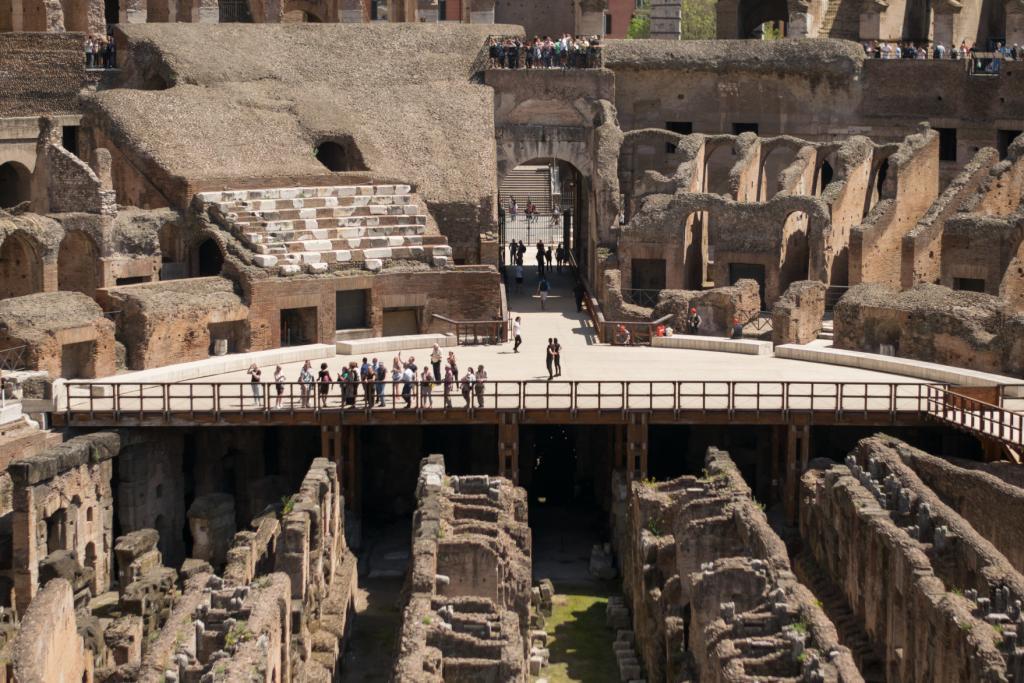
Distance to the Colosseum:
Triton Fountain set in the center of Rome, 0.40 km from (6 min walk) from Colosseum. 0.40 km from (6 min walk) Colosseum.
Leave a Comment