
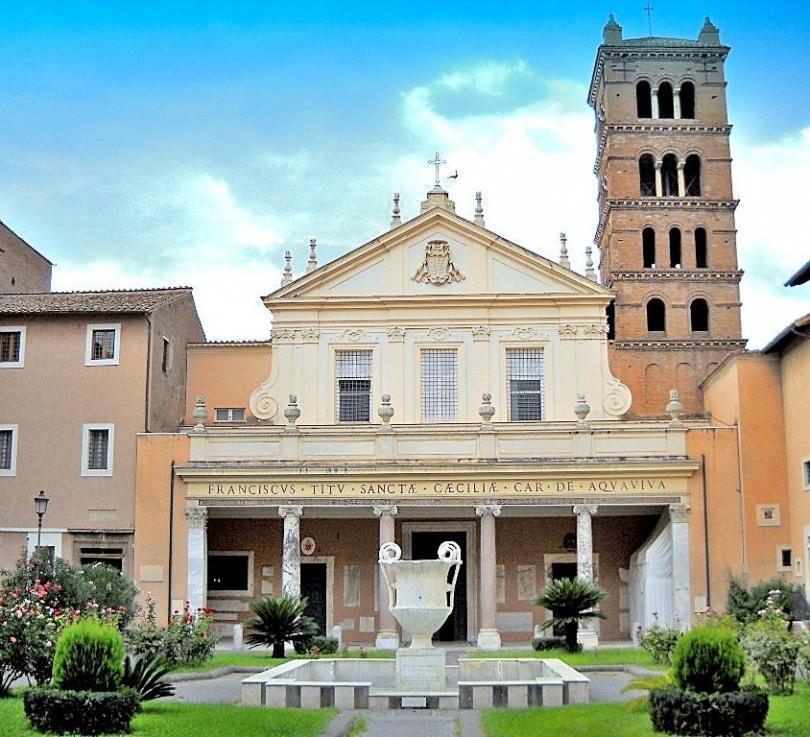
Basilica di Santa Cecilia is an exquisite historical church nestled in Rome’s tranquil Trastevere district, originally established in the 5th century on the very grounds of Saint Cecilia’s former residence. Significantly reconstructed in the 9th century under Pope Paschal I, who, according to tradition, envisioned Cecilia herself urging him to retrieve her remains, the basilica remains a vivid testament to early Christian devotion and medieval Roman architecture.
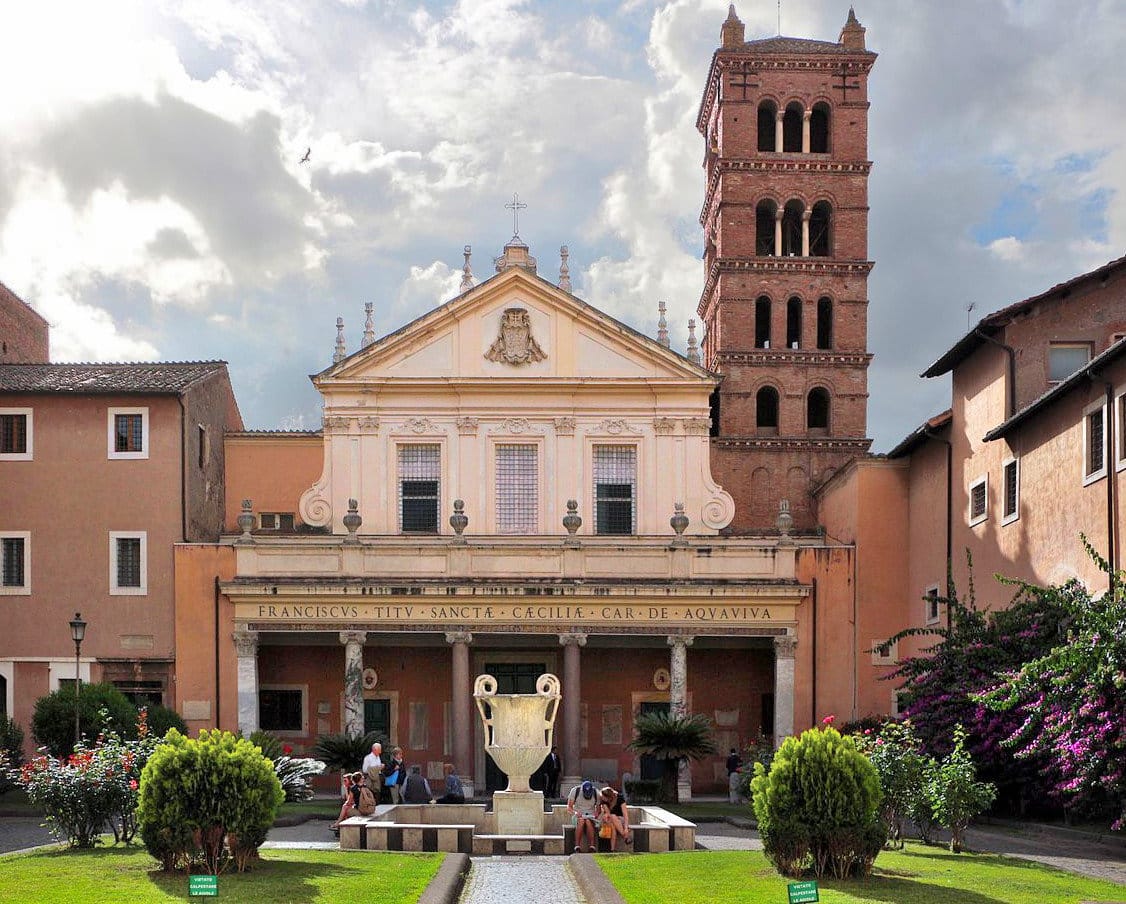
Basilica di Santa Cecilia
Saint Cecilia, known affectionately as “coeli lilia” meaning heavenly lily, remains one of Rome’s most venerated early martyrs, her life and martyrdom shrouded in intriguing legends. Did you know her story was preserved through centuries in both art and liturgy, resonating profoundly within Roman heritage? Her husband Valerian’s home, believed to have been located precisely on the church’s current grounds, adds a tangible historical depth to the basilica’s revered site.
An intriguing narrative surrounds the 9th-century renovations; Cecilia’s relics, according to historical tradition, were reverently transported here from the St Callistus catacombs, enriching the basilica’s spiritual and historical allure. Later architectural enhancements, including the elegant 12th-century bell tower and portico, infused the building with Romanesque aesthetics.
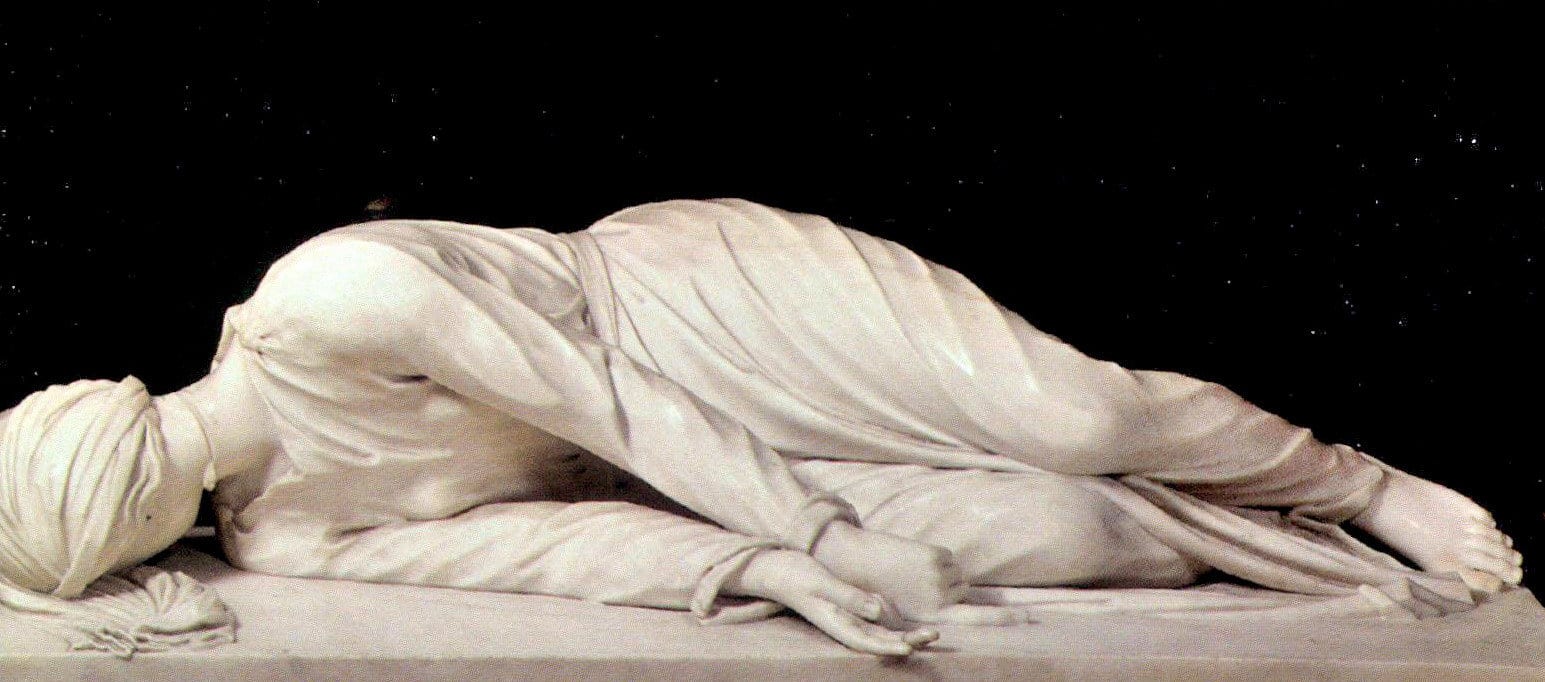
In the confessio under the altar lies the marble statue of St. Cecilia that was carved around 1600 by Stefano Maderno. This celebrated masterpiece shows the saint in the position in which she was found when her tomb in the Callistus Catacombs had been opened a year before.
Visitors are immediately struck by Ferdinando Fuga’s refined façade, an 18th-century masterpiece dating to 1725, seamlessly harmonizing with his design of the tranquil courtyard. Within the church’s choir, the eye is naturally drawn to Arnolfo di Cambio’s striking marble ciborium from 1283 and Stefano Maderno’s poignant 1600 sculpture of St Cecilia, dramatically capturing the very posture in which her body was reportedly discovered a year prior in the Calixtus catacombs.
Venturing further, the 9th-century mosaic adorning the apse offers mesmerizing glimpses into early medieval art traditions, while beneath, the crypt intriguingly reveals foundations of an ancient Roman household—an archaeological layer that vividly connects visitors to Rome’s distant past.
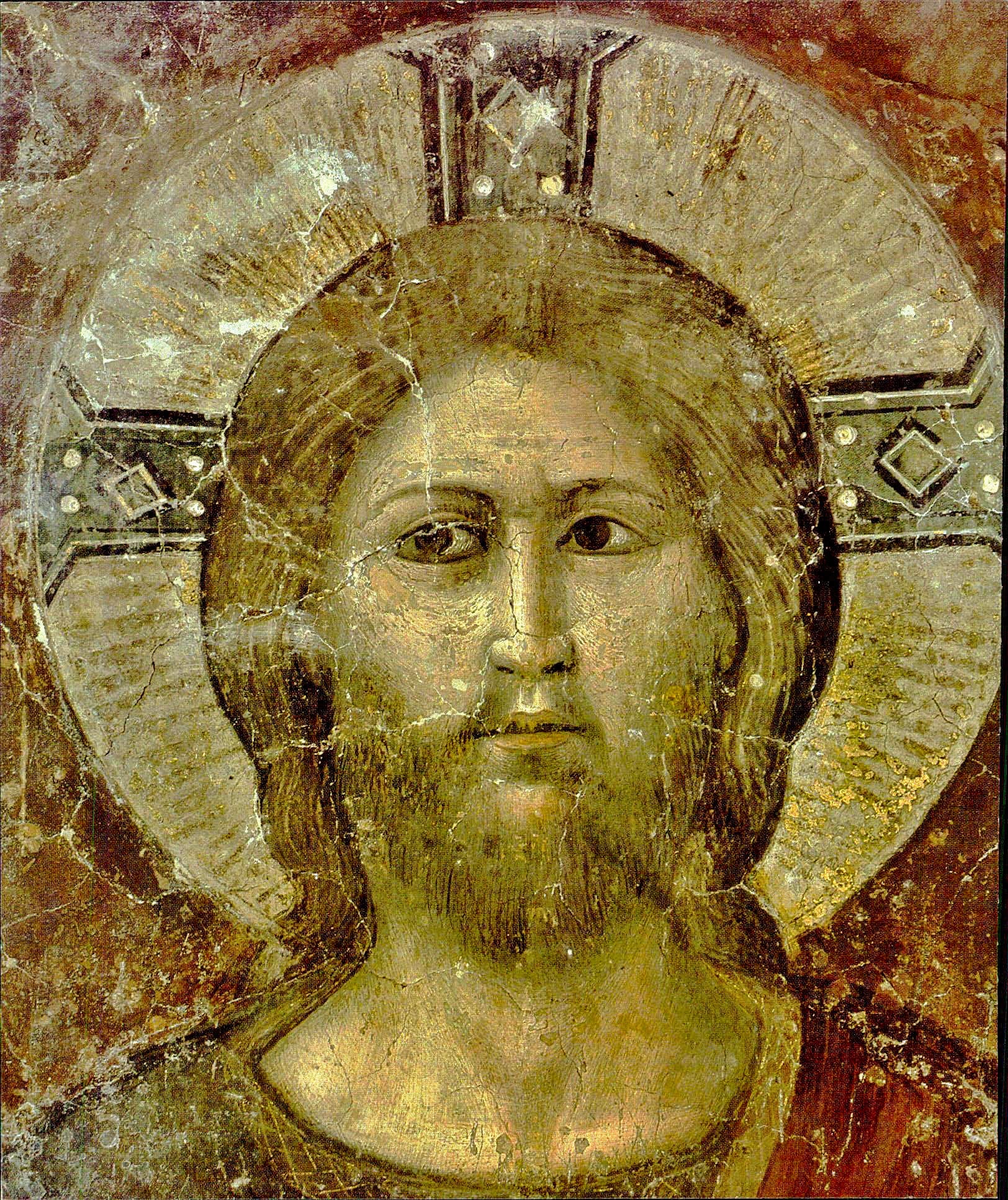
Basilica di Santa Cecilia – Pietro Cavallini (1273-1321), Detail, The Last Judgment. The frontal view of Christ (recalls the stern Byzantine tradition)
One particularly exquisite feature is the convent’s choir, adorned with Pietro Cavallini’s evocative 1293 fresco The Last Judgement. This fresco vividly portrays Christ and the Apostles with gestures and garments distinctly reminiscent of classical Roman sculptures, highlighting the seamless blend between ancient Roman and early Christian art.
Remarkably, Cardinal Rampolla undertook substantial restorations between 1899 and 1900, notably enhancing the crypt that houses the remains of Cecilia, Valerian, Tiburtius, and Maximus. These lavish restorations offer a captivatingly ornate counterpoint to the otherwise austere early medieval ambiance.
Visitors should note the Benedictine convent adjacent to the basilica remains an active religious community and requires special authorization for access.
The Basilica di Santa Cecilia warmly welcomes guests daily, with opening hours from 9.15 am to 12.45 pm and then again from 4 pm to 6 pm. Admission to this historic and sacred landmark is graciously offered free of charge.
For inquiries or additional visitor information, reach the basilica directly at 0645492739 or explore their official webpage: www.benedettinesantacecilia.it.
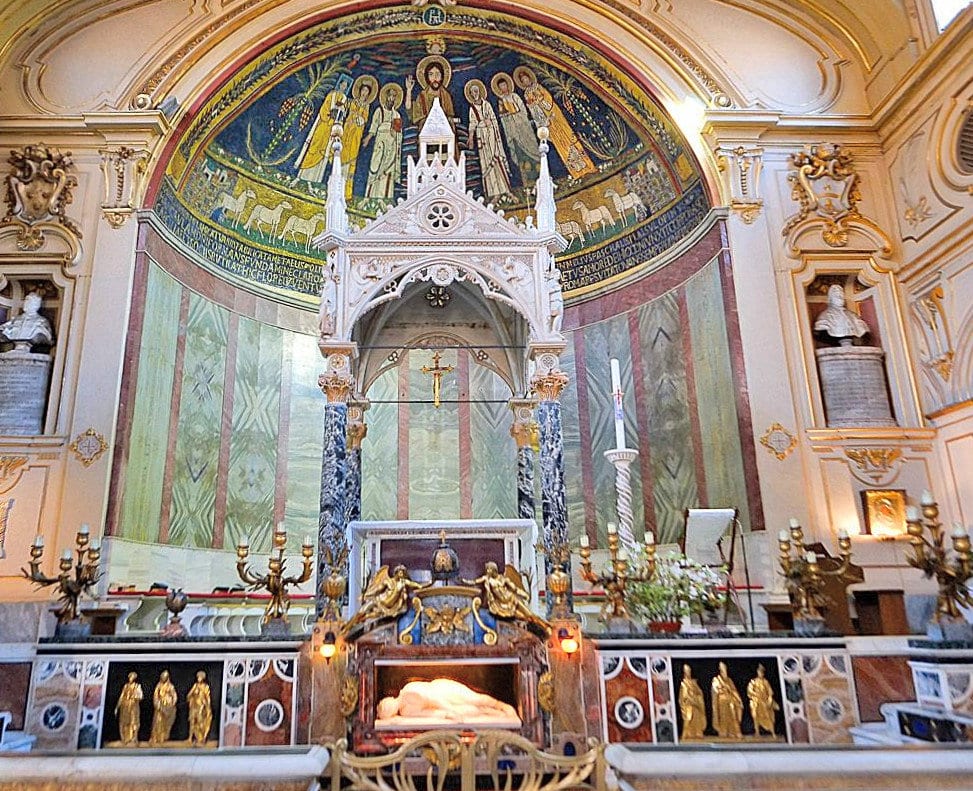
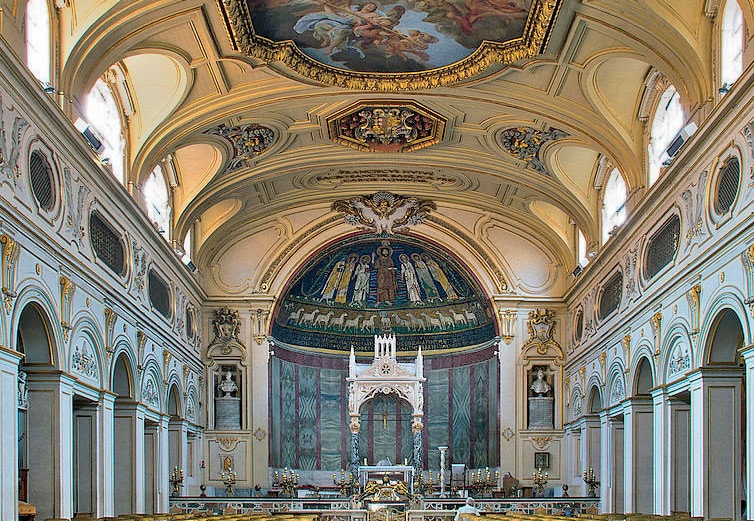
Interior of Basilica di Santa Cecilia
Leave a Comment