
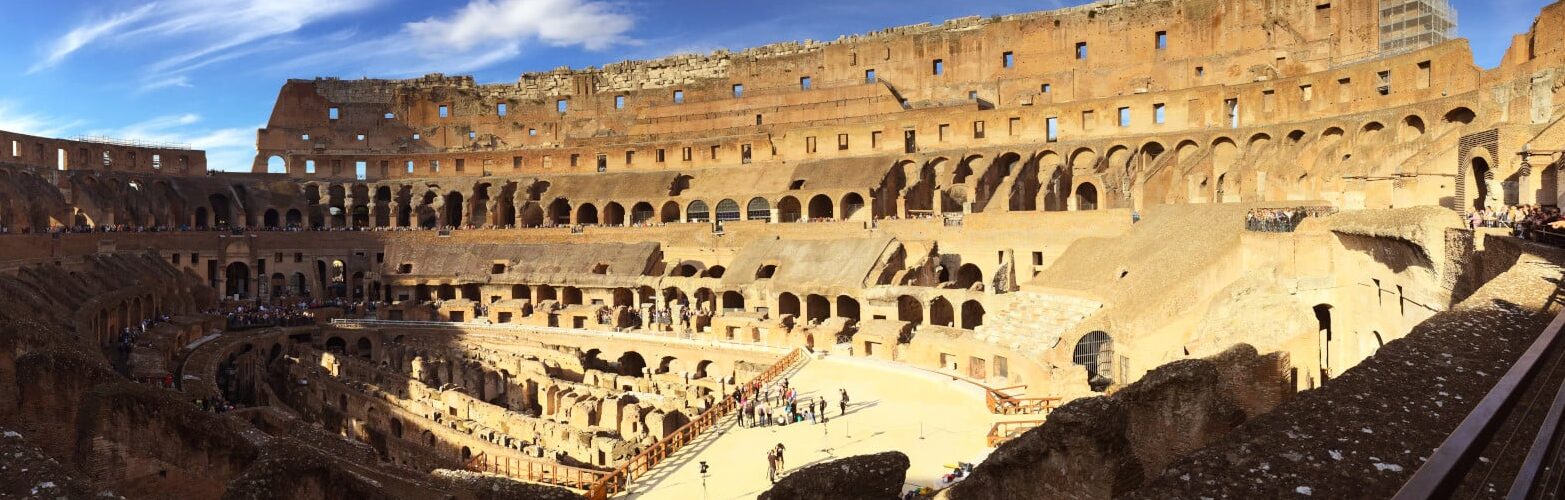
When you step through the Colosseum’s ancient arches, you’re not just sightseeing – you’re time-traveling. The towering arena has stood for nearly 2.000 years, and a casual stroll barely scratches the surface of its epic story. To truly appreciate the Colosseum’s layered history and feel its grandeur come alive, you’ll want more than just a glance from the sidelines. The key is finding the right Colosseum tour – one that can turn silent stone walls into storytelling partners and a simple visit into a journey through time.
In this comprehensive guide, we’ll help you do exactly that. From the gladiatorial battleground under your feet to the best viewpoints in the nosebleed seats, we compare every Colosseum tour option available – standard group walks, intimate private tours, after-dark explorations, underground adventures, and more. We’ll also tackle all the practical bits (tickets, timing, crowd tips) so you won’t feel lost in logistics. By the end, you’ll be equipped with insider knowledge to choose the perfect tour and make the most of your Colosseum experience.
Exploring Different Colosseum Tour Options
Not everyone’s ideal tour is the same. Some of us prefer a classic guided group tour that covers all the highlights, while others crave the intimacy of a private tour, the novelty of an after-hours visit, or the thrill of delving into restricted underground chambers. Here we’ll break down the main types of Colosseum tours – including their pros, cons, and what to expect – to help you determine which experience matches your interests and schedule.
Standard Guided Colosseum Tours
Think of a standard guided tour as your reliable compass for the Colosseum. These tours pair you with a licensed guide and a group of fellow visitors as you explore the Colosseum (and usually the Roman Forum/Palatine Hill) together. It’s a classic way to see the highlights with expert narration. Before presenting the Standard Guided Colosseum Tours, let’s discuss the Official Colosseum Tours.
Official Colosseum Tours:
The Colosseum’s management offers its own guided tours bookable through the official website. (Click here for the educational tours section of the official website) These tend to be budget-friendly – for example, an official English-language tour can cost around €26 (which includes the €18 entry ticket) – making them popular for travelers on a budget.
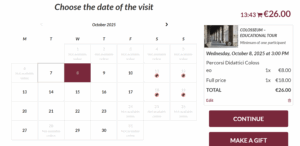
Official Colosseum Educational Tour – Booking Screen
The guides are fully licensed and knowledgeable (all guides in Italy must pass rigorous exams on history and art to be certified, so even the official tours ensure quality information). The trade-off is that official tours are often large groups. It’s not uncommon to end up in a group of 25 or even 50 people with a single guide. In such cases, you’ll be given a radio headset so you can hear the guide over the noise of the crowd. The experience can feel a bit impersonal if the group is very crowded – you might find yourself jostling for a good view or reluctant to ask questions in a big crowd.
Just be prepared for a slower pace as the guide shepherds a big group, and remember that these tours typically focus on the Colosseum itself, not the Roman Forum/Palatine (you’ll usually explore those areas on your own after the guided portion).
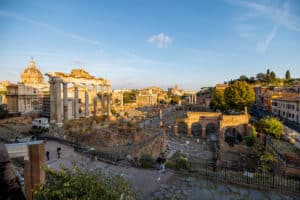
Roman Forum
Small-Group Tours:
Aside from the official offering, numerous tour companies run small-group Colosseum tours that aim for a more personal touch.
Group size can range from about 6 people up to 15 or so, depending on the company and price point. Many travelers find that a group of around 10-15 is an ideal balance – you still get a social vibe and the cost per person is moderate, but the group is intimate enough that you can easily interact with the guide and move at a comfortable pace.
Small groups won’t require you to strain to see or hear; in fact, you’ll often feel like you have almost a private experience. These tours cost more than the large official tours (because you’re essentially paying for a bigger slice of the guide’s time), but they also tend to cover more ground. For example, many small-group tours include a guided walk through the Forum and Palatine Hill in addition to the Colosseum, giving you a comprehensive overview of ancient Rome in one package.
The guides on these tours are typically licensed pros just like the official ones – often art historians, archaeologists, or experienced locals with a passion for storytelling.Companies like Walks of Italy, Context Travel, Wanted Italy, and Dark Rome Tours are well-known for their expert guides and small group ethos.
What to Expect:
On a standard guided tour (whether official large-group or a smaller-group operator), you’ll typically meet your guide near the Colosseum at a designated time. After a brief introduction, you’ll use a special group entrance to skip the ticket line. Inside, the guide will lead you to various vantage points – maybe starting on the ground level, then moving up to the second tier – and regale you with tales of the Colosseum’s construction, its grand opening games in 80 AD, the gladiatorial combats and wild beast hunts, and the site’s post-Roman life as a fortress, a quarry, and finally a World Heritage tourist attraction.
Good guides don’t just spew dates; they share colorful anecdotes (e.g. the story of the naval battle reenactments, or Emperor Titus hosting 100 days of games to inaugurate the arena) and dispel popular myths (for example, did you know that the Colosseum was never actually filled with water for naval battles, despite the legends?). They’ll also point out where things happened: “This gap in the arena floor is where a trapdoor led down to the underground; imagine a leopard springing up from here into the arena!” or “See that cross at one end? It marks the spot that later became a shrine.” With a bit of imagination, guided by the commentary, you might feel the ghosts of ancient Romans around you – the cheers, the drama, the awe.
Most tours allocate about 1 to 1.5 hours for the Colosseum portion, and if Forum/Palatine is included, another 1 to 1.5 hours for those (often with a short break in between). By the end, you should feel well-versed in not just the facts, but the significance of what you’ve seen. As a bonus, your guide can give recommendations for other sights or even great local eateries to try after the tour – don’t hesitate to ask for tips as you wrap up.
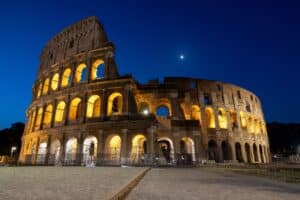
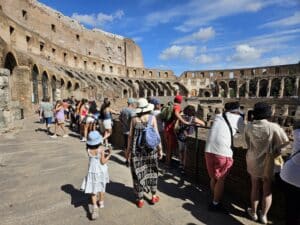
from €59.00 EUR from €49.00 EUR from €50 EUR from €79.00 EUR from €44.00 EUR from €18 EUR Now, let’s say you dislike crowds or you have a very specific interest in the Colosseum. Maybe you’re traveling with your family or a tight-knit group of friends and you’d prefer an experience just for your party. In that case, a private Colosseum tour is the premium option to consider. Going private means the tour is just you and your chosen companions, with a dedicated guide – no strangers tagging along. Private tours can accommodate from a single person up to a family or even a larger private group, but generally if you have more than 6-8 people, it might actually be more cost-effective to book a small-group tour instead. Private tour pricing usually is a flat fee for the guide’s time plus the tickets, making it pricier for a solo traveler or couple, but more reasonable if you’re splitting the cost among a group of 4-6. For example, a 3-hour private Colosseum+Forum tour might be around €300 total for the group (not including entry tickets), whereas a group tour might be €60 per person. So if you have 5 people, private and group costs roughly equal out; fewer than 5, the group tour is cheaper per person; more than 5, private can actually be a great deal per person and you get the exclusive service. The Experience: You’ll meet your expert guide, use skip-the-line entry, and shape the visit to your interests. Private options can include special areas like the underground, arena floor, or upper levels when available, and some offer after-hours access. For many, this is the most immersive, least crowded way to see the Colosseum. It’s not uncommon for a private tour to feel more like strolling with a super-educated friend, rather than a formal tour – especially if you gel well with your guide. (Travel-Tip: If you’re booking a private tour, tell the provider your interests or needs in advance so they can tailor the route and pair you with the right guide.) from €220 EUR (per person) from €549 EUR (per group up to 2) from €142 EUR (per person) When the sun sets and the daytime crowds disperse, the Colosseum undergoes a dramatic transformation. Visiting this ancient amphitheater at night is like stepping onto a theater stage just as the house lights dim – there’s a hushed, almost sacred atmosphere that descends. Colosseum night tours take advantage of this special vibe, offering visitors a chance to explore the monument after normal closing time, with atmospheric lighting and far fewer people around. So, what’s the draw of a Colosseum night tour? First, the setting is undeniably romantic and haunting. The massive stone walls are lit up with a golden glow, and the dark sky visible through the open top makes the place feel even more imposing. You might see the moon peeking through the arches or the stars twinkling above – a reminder that you’re standing in a spot where people have stood gazing at the same sky for nearly 2.000 years.The contrast of modern Rome’s lights in the distance and the shadowy ancient arena around you is spine-tingling. In these quieter hours,you can almost hear the history echoing. Colosseum Tours – Colosseum by Night Night tours are typically limited in size and availability. Because not every company has access and the Colosseum staff only allow a certain number of people inside at night, these tours are generally small groups and often sell out quickly. You may find them listed as “Colosseum by Night” or “Moonlight Tour of the Colosseum” or similar. Many include the coveted underground section as part of the night visit (since it’s easier to manage in off-hours), so you often get a double bonus: nighttime ambience and special access areas. One thing we love about the night experience is that it feels like the Colosseum is putting on a show just for you. The play of artificial light and shadow can highlight details you might miss in bright daylight. For example, you’ll see the contours of the ancient stonework sharply reliefed by light, and the subterranean corridors (if open) look especially mysterious under low light. Guides on night tours tend to lean into the dramatic storytelling – after all, it feels natural to speak of gladiatorial combat and wild animal hunts when you’re peering down into a dimly lit arena floor, your imagination doing half the work. There’s a certain theatrical flair to experiencing the “stage” of the Colosseum at night, almost as if the ghosts of the past might just step out from the wings. from €89.00 EUR from €64.00 EUR Practical matters: dress for the evening weather (Rome can be chilly at night except in high summer) and be prepared for the tour to start quite late – some begin at 7:00 PM, others not until 9:00 or 10:00 PM depending on the season. Night tours usually do not include the Forum/Palatine, because those areas are closed after dark, so it’s a Colosseum-focused visit – which is fine, since that alone is a couple of hours of content. The upside is you could do other sightseeing during the day, have a nice dinner, and then cap off your night with the Colosseum tour. How’s that for a memorable day in Rome? Editor’s Note: For more information and additional options on Colosseum night tours, please visit our Colosseum Night Tours page. Beneath the Colosseum’s arena floor lies a warren of chambers and passageways that were once the beating heart of the amphitheater’s spectacles. These substructures, known as the hypogeum (Latin for “underground”), are where gladiators psyched themselves up before combat, where exotic animals paced in cages awaiting their turn in the spotlight, and where stagehands operated a complex system of lifts and trapdoors to create jaw-dropping special effects above. Most visitors don’t get to see this hidden side of the Colosseum – unless you take a Colosseum Underground tour, which grants special access to these restricted areas. Underground Chambers of Colosseum The underground tour is a bit like stepping into the backstage of a grand theater production. You go below the arena, onto the original ancient floor level (now an open-air maze of walls since the wooden floor is long gone). As you stand in these dim corridors, it’s easy to imagine the adrenaline that must have coursed through the fighters and animal handlers here. The guide will usually start by painting a picture: “Look around at these walls – they were once two stories high, lined with holding cells. Right where you’re standing, a lion might have been in a crate, and a gladiator in the cell next door, both about to ascend into the arena…” It sends chills down your spine (in the best way possible). On a typical underground tour, you’ll visit a portion of the hypogeum, seeing the exposed brick foundations and a reconstruction of some lifts. You might see the elevator shafts where winches and pulley systems hoisted animals in cages up to trapdoors on the arena floor. Guides explain the ingenious stage machinery the Romans had – they could have an elephant suddenly appear in the middle of the arena via these lifts, to the astonishment of the crowd. They even had mechanisms to flood parts of the arena for brief simulated naval skirmishes (though full-scale “naval battles” in the Colosseum are largely a myth, smaller water displays did occur). In these underground passages, you’ll also learn about the logistics of the games: how did they coordinate events smoothly? Where did the gladiators prepare? You might stop by a rough area that was believed to be a ludus (training-room) or an armament storage. The guide could share insights into daily life for a gladiator – many were slaves or prisoners trained in special schools, and they might only find out on the morning of the games which opponent or animal they’d be facing. The tension and anticipation in those moments must have been immense. (Important: If you’re planning an underground tour, wear comfortable shoes – the ground down there is uneven and can be damp in spots. And if you’re claustrophobic, don’t worry: while it is the “underground,” it’s not a tight tunnel – it’s an open maze and part of it is exposed to the sky now. You won’t feel like you’re in a cave; it’s more like an open basement.) Some tours advertise Arena Floor access, meaning you get to step out onto a portion of the reconstructed floor of the Colosseum’s arena. This is a special perk because standard admission visitors can only walk around the perimeter of the arena, not on it. With an arena floor tour, you typically enter through the “Gladiator’s Gate”, which was a special entrance on the ground level that in ancient times was used by the combatants (and, frankly, also to carry out bodies and debris – it was sometimes nicknamed the Gate of Death). Today, walking through that gate onto the arena is a goosebump-inducing moment. When you stand in the center of the Colosseum’s arena floor, you get a 360-degree view of the cavea (the seating tiers) rising around you. It’s easy to imagine what a gladiator must have felt like, heart pounding, hearing 50.000 spectators cheering from those stands. Even though most of the marble seats are gone, the sheer scale of the spectator area is evident – you feel very small, and the amphitheater very tall. This perspective also offers fantastic photo opportunities: you can capture the unique angle looking up at the encircling walls, and often the tour will allow a few minutes for you to savor the moment and snap pictures. Arena floor access is often bundled with underground tours (since you have special entry anyway). But there are some tours that just include the arena access without going to the hypogeum. If you’re a bit squeamish about tight spaces or just want a shorter tour, an arena-only special access tour could be a good compromise – you see the main areas and get the “wow” moment on the floor, without the longer time needed for the underground portion. A few years back, the Colosseum opened up its highest levels (the third, fourth, and even fifth tiers) to visitors on special tours called the Belvedere tours. “Belvedere” means “beautiful view” in Italian, and it’s an apt name. These upper-level tours take you higher than the standard public areas, allowing you panoramic views both inside the Colosseum and outward over the city of Rome. Climbing to these upper rings (don’t worry, there are modern elevators for part of the way if needed) gives you a profound appreciation for the size of the Colosseum. When you look down from the top tier, the arena floor seems far below, and the people look tiny – it really sinks in that this place held an estimated 50,000+ spectators. In ancient times, the higher seats were where the common folk, women, and lower-status individuals sat, often on wooden bleachers. Up there, a guide might talk about how the view and experience differed for the plebs in the nosebleed seats versus the elites down by the arena. You also get to see some sections of the Colosseum that still have original plaster and paint remnants on the walls, which is fascinating – hints of the colors that once adorned this stadium. from €71.00 EUR The other big draw is the external view. From the Colosseum’s top, you can gaze out at the Roman Forum sprawling next door, the Arch of Constantine nearby, the Palatine Hill’s ruins, and beyond them the rooftops of modern Rome. It is one of the best viewpoints in the city, especially for photography or just orienting yourself. On a clear day, you can see the Vittoriano monument, the dome of St. Peter’s, and the hills of Rome in the distance. It really puts the Colosseum in context with its surroundings – you see how it dominates the skyline of ancient Rome’s center. Belvedere tours (Colosseum top tiers; not included with standard Colosseum entry) often combine with other areas (some include the underground + upper levels in one mega-tour). They usually have small group sizes (max 25 or so) and cost more due to the special access. Keep in mind, not all of these upper levels are always open; sometimes they close for maintenance or safety reasons. But if it’s available when you’re visiting and you love views, it’s a fantastic add-on. One thing to note: being at the top, these areas are more exposed to the elements. If it’s a hot day, it’ll be quite sunny up there – wear a hat and sunscreen. If it’s blustery, hold onto your stuff because a strong breeze can catch you by surprise. And of course, you’ll be walking up ancient staircases for part of it – which is actually cool because you get to use the original VIP exit of the Colosseum to come back down, a passage not seen by most visitors. For those looking to merge the past with cutting-edge technology, virtual reality (VR) tours offer a unique perspective. Equipped with VR headsets or augmented reality devices, you can step back in time to see the Colosseum as it stood in all its glory. Layers of history rise before your eyes: the bustle of spectators, the colorful pennants, and the vivid spectacle of gladiatorial combat or theatrical performances. This approach taps into both your imagination and your senses, creating an immersive learning experience that goes beyond static descriptions. VR tours can enrich your understanding, making it feel as though you’ve journeyed directly into ancient Rome itself. from €54.00 EUR Traveling to the Colosseum with kids in tow? It’s an amazing family experience, but let’s face it – the attention span of a 7- or 10-year-old might not be thrilled by a two-hour lecture on architectural techniques or Roman political history. That’s where family-friendly Colosseum tours come in, designed to make the experience engaging and fun for young visitors and informative for adults. What makes a tour “family-friendly”? For starters, the guides who run these are specialists in edutainment – they know how to simplify complex history into gripping stories and interactive activities that kids can understand and enjoy. They might, for example, frame the tour as a sort of treasure hunt or quest. Children could be given a map or a simple checklist of things to spot (“Find the carving of a lion’s head!” or “Count how many archways are on the second level.”). As they explore, the guide might share gory and exciting tales that naturally appeal to kids’ imaginations: stories of gladiators with stage names like “The Barbarian”, or the types of wild animals (lions, tigers, bears – oh my!) that once appeared here. They might ask questions like, “Can you imagine going to a show with elephants and rhinos charging around? Would you be scared or excited?” – prompting the kids to put themselves in the sandals of a Roman child long ago. Many family tours also use visual aids. Picture books, flashcards with ancient Roman symbols, or even a tablet with some animated reconstructions can captivate younger audiences. Some guides dress up in ancient-style clothing or use props, like replica helmets or swords that kids can (carefully) handle for a photo. The idea is to break up the monotony and spark curiosity at every turn. The pacing is adjusted too. Family tours are typically shorter at each stop, with more breaks and child‑friendly pacing.. The guide might find a shady spot to have everyone sit and, say, role-play a mini gladiator “training school” where the kids get to pretend to be gladiators and learn a salute or two. This keeps them from getting too tired or bored, and also makes the learning hands-on. For parents worried that a “kid-focused” tour might be oversimplified, fear not: a good family tour strikes a balance. Adults will still learn plenty – guides often drop interesting facts and answer in-depth questions from parents while the kids are momentarily distracted by looking for the next “clue” in their scavenger hunt. Essentially, everyone comes away with something. Plus, the truth is, when your kids are happy and engaged, your own experience is ten times better. Instead of dealing with a mid-tour meltdown or constant “I’m bored” whining, you can enjoy the Colosseum through their eyes – which is a fresh perspective even if you’ve been before. from €69.00 EUR Logistics: If you have a stroller, note that the Colosseum has an elevator, so it’s accessible, but you might have to fold the stroller at times on the tour. Family tours often welcome kids of all ages, but realistically children who can walk on their own and have basic listening skills (maybe age 6 and up) will get the most out of it. If you have a mix of ages, try to find a private family tour so the guide can adjust to your kids specifically. Some may tailor content differently if you have a teen vs a kindergartner. Even with all this information, you probably still have a few questions about making the most of your Colosseum visit. Don’t worry – you’re not alone. Below we address some of the most common queries that travelers have, along with our tips gathered from experience and expert advice. Consider this your Colosseum tour FAQ cheat-sheet: The best times to visit the Colosseum to avoid the worst crowds are generally right when it opens (around 8:30 AM) or in the later afternoon (after 4:00 PM or so, depending on season). Early morning we’ve discussed – it’s cooler and quieter. Late afternoon has the advantage that many tour groups have left by then, and if you go in winter, the sunset light is gorgeous (though be aware of shorter daylight hours). One thing to note: the Colosseum’s last entry is usually one hour before closing, and they start ushering people out soon after, so don’t cut it too close to closing time or you’ll feel rushed. If you opt for a guided tour, those are typically 1.5 to 3 hours, so that’s how long you’ll be inside with the guide. After a guided tour, you often can stay longer on your own if you want (for example, if your tour ends inside the Colosseum, you could linger after thanking your guide – though once you exit, you can’t re-enter). Many tours end at the Forum or Palatine Hill, in which case you might part ways there and then you’re free to roam those areas more if you’d like. For a self-guided visit with no tour, we’d recommend allocating at least 1 hour for the Colosseum interior and maybe another 1-2 hours for Forum/Palatine. So, around 3 hours total to not feel rushed. If you’re a real history aficionado, you could easily spend half a day combing through the sites, but most people’s stamina will wane after a couple of hours. One strategy if you have a ticket (not a fixed tour): visit the Colosseum first (say from 9 to 10 AM), then take a break (maybe grab a coffee or snack outside), and afterward use the same ticket to enter the Forum/Palatine (since it’s a combined ticket) around 11 AM and spend another hour or two there. The Forum/Palatine are adjacent and can be done at your own pace – there’s a lot to see, but even a leisurely walk through hitting the highlights (Curia, Arch of Septimius Severus, Temple of Saturn, up to Palatine overlooks, etc.) is doable in 60-90 minutes. Remember that once you exit each site, you can’t re-enter on the same ticket. You get one entrance to Colosseum and one to the Forum/Palatine area. There is no re-entry to the Colosseum (even to use the bathroom outside, unfortunately), so use facilities inside before you leave, and be sure you’re truly done when you head out. A glimpse from our last visit to the Colosseum: the Colosseum’s interior. If you’re the type who has already devoured documentaries, blog posts, and guidebooks about the Colosseum, you might feel like you could guide yourself. And indeed, a well-prepared traveler can appreciate a lot on their own. The Colosseum has signs and informational plaques, and your prior knowledge will help you make sense of what you see. So no, a tour isn’t “necessary” in the sense that you can’t enjoy the site without one. However, even well-read visitors often find value in a live guide for a few reasons. First, the guide can synthesize the information in real-time, pointing out things in front of you that no book or video can tailor to the moment. You might know in theory about the trapdoors in the arena, but it hits differently when a guide physically points to the spot and perhaps even shows a little illustration. They also know the latest findings – archaeological research is ongoing, and a guide might mention something that was discovered or revised recently (especially true for local expert guides who stay current with the Colosseum Archaeological Park’s news). Importantly, a guide can enrich your understanding with stories and context that tie it all together. You might know the facts, but the narrative and interpretive angle a skilled guide provides can transform facts into a memorable story. It’s the difference between knowing random data points versus experiencing a cohesive journey through history. Additionally, consider the practical side: a guide deftly navigates the crowds and knows the site’s flow. They’ll take you along a route that optimizes what you see and maybe avoids the most congested spots until a better time. They also handle the timing (ensuring you don’t miss your Forum visit window if you have one, etc.). So even if you’re an independent traveler usually, at a mega-site like this, a guide can reduce stress and maximize your visit. That said, if you truly prefer solo exploration and have thoroughly educated yourself, you can absolutely have a rewarding time self-guiding. Perhaps use an audio guide or a mobile app as a middle ground (the official Colosseum app or Rick Steves’ free audio tour can be good choices). Many people do fine that way. Just be disciplined in following a structure so you don’t inadvertently skip a highlight or misidentify a ruin. In the end, it comes down to your learning style. We’d say: for most, a guided tour is worth it even if you “know” the history, because the real-time interaction and enriched storytelling add value you can’t get from a book alone. But if you’re confident and enjoy exploring alone, you won’t be totally lost without a guide – the Colosseum will still wow you. Absolutely, and in fact most people do. The key is smart planning so you don’t exhaust yourself or end up sprinting between sites. A popular combo is pairing the Colosseum area in the morning with a different type of attraction in the afternoon. For example, you could do a morning Colosseum tour, finishing around midday, then have a leisurely lunch (perhaps in the charming Monti neighborhood 10 minutes away, or near Piazza Venezia). In the afternoon, you might explore something less physically demanding, like visiting the Capitoline Museums (which are right adjacent to the Forum area and have incredible ancient statues and a rooftop cafe with a view – a nice complement to the ruins you saw). Or stroll to the Pantheon and Trevi Fountain, which gives you a dose of later historical sites and some gelato along the way. If you’re keen on ancient Rome, you might combine the Colosseum+Forum in the morning and then head to Via Appia (Appian Way) or the Baths of Caracalla in the late afternoon for more ruins – but that’s a lot of ruins in one day; only the most ardent history buffs would do that without burnout. A classic one-day itinerary is: Colosseum & Forum in morning, a rest break, then Vatican Museums or another major site in afternoon. However, doing Colosseum and Vatican both in one day is quite ambitious (two huge, crowded sites). It can be done if you’re short on time – maybe Colosseum tour 9am-12pm, lunch, then 3pm Vatican entry – but you’ll be very tired by evening. Some tour companies even sell combo packages (Colosseum + Vatican in a day). If you attempt it, make sure to pre-book both, and maybe treat yourself to a nice dinner after because you’ll have earned it! Another idea: after the Colosseum and surrounds, spend the remainder of the day doing a different vibe of activity. For instance, an afternoon food tour in Trastevere, or rent a bike at the Borghese Gardens, or simply relax at a cafe in Monti and people-watch. This gives a balance so you’re not overloaded with historical info all day. For those wondering about doing Colosseum and Pompeii the same day (I’ve heard this asked) – no, don’t even try. Pompeii is a separate full-day trip from Rome. Likewise, Colosseum and a day-trip out of Rome on the same day isn’t feasible (unless that day-trip is just a half-day to nearby Ostia Antica or so, but even then, do Colosseum one day, Ostia another if possible). By now, we’ve navigated through the myriad of Colosseum tour options and answered key practical questions. From understanding ticket nuances to deciding between an early morning serene visit or a dramatic night tour, you should feel equipped to make choices that suit your travel style. Let’s take a step back and consider the big picture: visiting the Colosseum is not just about ticking off a landmark from your list – it’s about how you experience it. With the right preparation and a bit of insider knowledge, your time at the Colosseum can be as straightforward or as richly layered as you desire. You might opt for a simple entry and marvel at the architecture on your own terms, or you might invest in an in-depth tour that peels back layer after layer of history and myth. There’s no wrong approach, as long as you approach it with curiosity and openness to the stories embedded in those ancient stones. In our view, a well-chosen tour is like a key – not just another item on your itinerary, but a key that unlocks facets of the Colosseum (and by extension, Roman history) that you’d likely miss otherwise. It provides context, narrative, and often a bit of that “wow, I didn’t know that!” factor which turns a cool sight into an unforgettable memory. Buon viaggio and enjoy your Colosseum tour!
Duration: 3 Hours
Organized by: Show Me Italy
16.211 Reviews
Duration: 2.5 – 3 hours
Organized by: Crown Tours
91.256 Reviews
Duration Options: 1-3 Hours
Organized by: City Walkers Tours
31.209 Reviews
Duration: 3 Hours
Organized by: I Love Rome
17.140 Reviews
Duration: 1 Hour
Organized by: Trip in Art
668 Reviews
Closest Date: September 27, 2026
Availability checked 24 September 2026; a 3:00 p.m. session had 1 place available; availability can change.
Validity: 24-hour
Seller: Parco archeologico del ColosseoColosseum Private Tours (Exclusive Small-Group Experiences)
Group Size and Cost:
Duration: 2.5 hours
Organized by: Kids Raphael Tours And Events
139 Reviews
Duration: 3 hours
Organized by: City Wonders Ltd.
12 Reviews
Duration: 2 hours
Organized by: The Ultimate Italy
77 ReviewsColosseum Night Tours (After-Hours Magic)
Duration: 2 hours
Seller: Crown Tours
1.142 Reviews
Duration: 2 hours
Organized by: City Wonders Ltd.
886 ReviewsColosseum Underground Tours (Beneath the Arena)
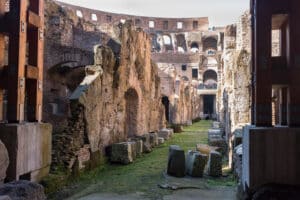
What You’ll See:
Arena Floor Access (Stage-Level Perspective)
Belvedere Upper-Level Tours
Duration: 75 Minutes
Organized by: The Ultimate ItalyColosseum Virtual Reality Tours
Duration: 2 Hours
Organized by: Ancient and Recent
881 ReviewsFamily-Friendly Colosseum Tours
Duration: 1.5 Hours
Organized by: Gray Line I Love Rome
223 ReviewsPractical Tips and Frequently Asked Questions
What’s the best time of day to visit, and how long should I plan to spend inside?
If I’ve done a lot of reading/research on the Colosseum myself, do I really need a tour?
Can I combine my Colosseum visit with other activities on the same day?